Is Peru safe for Australians? The short answer
Yes. For travellers heading to Cusco, the Sacred Valley and Machu Picchu, Peru is a safe and rewarding trip when you plan well and travel with a licensed local operator.
If you have read the Smartraveller advice for Peru, the warnings can sound alarming. I understand. I have guided travellers on the Inca Trail, Salkantay and Lares for more than 15 years, and I was born in the mountains of Ollantaytambo. So, is Peru safe for Australians? In this guide I explain what the official advice really means on the ground in Cusco, and what Australians in particular need to know before they fly.
You will find practical answers on entry rules, yellow fever, altitude, safety in Cusco and Ollantaytambo, and how to prepare for the 4-day and 2-day Inca Trail.
What Smartraveller says about Peru, explained by a local guide
For most visitors, the honest answer to “is Peru safe for Australians?” depends on where you go, and the classic Cusco–Machu Picchu route is one of the safest in the country.
Smartraveller rates Peru as “exercise a high degree of caution” overall. That is the same level it gives many popular destinations in South America and Asia, and it is not a warning against travel.
The higher “reconsider your need to travel” levels apply only to remote areas far from the tourist trail: the VRAEM valleys in central Peru and some border zones near Colombia and Ecuador. Cusco, the Sacred Valley, Machu Picchu and the Inca Trail are hundreds of kilometres from those areas.
Most of the risks Smartraveller lists are big-city problems, mainly in Lima: pickpocketing, phone snatching, unlicensed taxis and drink spiking. These are real, and the tips below show how to avoid them. Other points, such as strikes, rainy-season landslides and unregulated adventure operators, matter for trekkers, and a good local operator handles them for you.
Entry requirements for Australians
Australians do not need a visa to visit Peru as tourists. According to Smartraveller, you get a permit of up to 90 days on arrival, with a maximum of 183 days in one year.
| Requirement | What you need |
|---|---|
| Visa | Not needed for tourism; up to 90 days on arrival |
| Passport | At least 6 months’ validity |
| Passport stamp | Airports don’t stamp passports; your entry is recorded digitally |
| Cash | Declare more than US$10,000 on arrival |
| Travel insurance | Must cover medical costs and evacuation |
| Overland from Bolivia or Ecuador | Get an official Peruvian entry stamp at the border |
Guide’s tip: the Inca Trail permit is issued in your passport name and number. If you renew your passport after booking, tell your operator straight away so the permit can be updated.
Yellow fever: Cusco, the Amazon and coming home to Australia
There is no yellow fever in Cusco city or Ollantaytambo. Yellow fever is spread by mosquitoes that live in warm, low jungle areas, and Cusco sits at 3,399 m. The CDC Yellow Book has long said the vaccine is not recommended for trips limited to Cusco city, the Inca Trail and Machu Picchu.
Machu Picchu update: after yellow fever cases rose in South America, the CDC issued a travel health notice in April 2025 that also lists Machu Picchu. The site itself is not a risk area, but the route passes through lower, warmer valleys. Ask your travel doctor whether the vaccine is right for your itinerary.
Going to the Amazon? If you add Tambopata, Manu or Iquitos, get the yellow fever vaccine. The CDC recommends it for travellers aged 9 months and older going to these jungle areas, at least 10 days before you arrive.
Coming home to Australia: Peru is on Australia’s list of yellow fever risk countries. When you arrive home, you must declare if you have been in a risk country in the last six days, and you may be asked for your vaccination certificate. See the Australian Department of Health yellow fever page.
Guide’s tip: if you get the vaccine, pack the yellow International Certificate of Vaccination with your passport. Getting home is much easier with it in hand.
Altitude: why I recommend acclimatising in Ollantaytambo
My number one tip for Australians is to sleep low first. Most of you live near sea level, and Cusco sits at 3,399 m. Going straight to Cusco after a long flight is when most altitude sickness happens.
Ollantaytambo sits about 600 m lower, at 2,792 m, in the Sacred Valley. The CDC Yellow Book chapter on Peru suggests the same strategy: start in the Sacred Valley, then visit Cusco once you are better acclimatised.
| Place | Altitude |
|---|---|
| Lima | Sea level |
| Aguas Calientes (Machu Picchu town) | about 2,040 m |
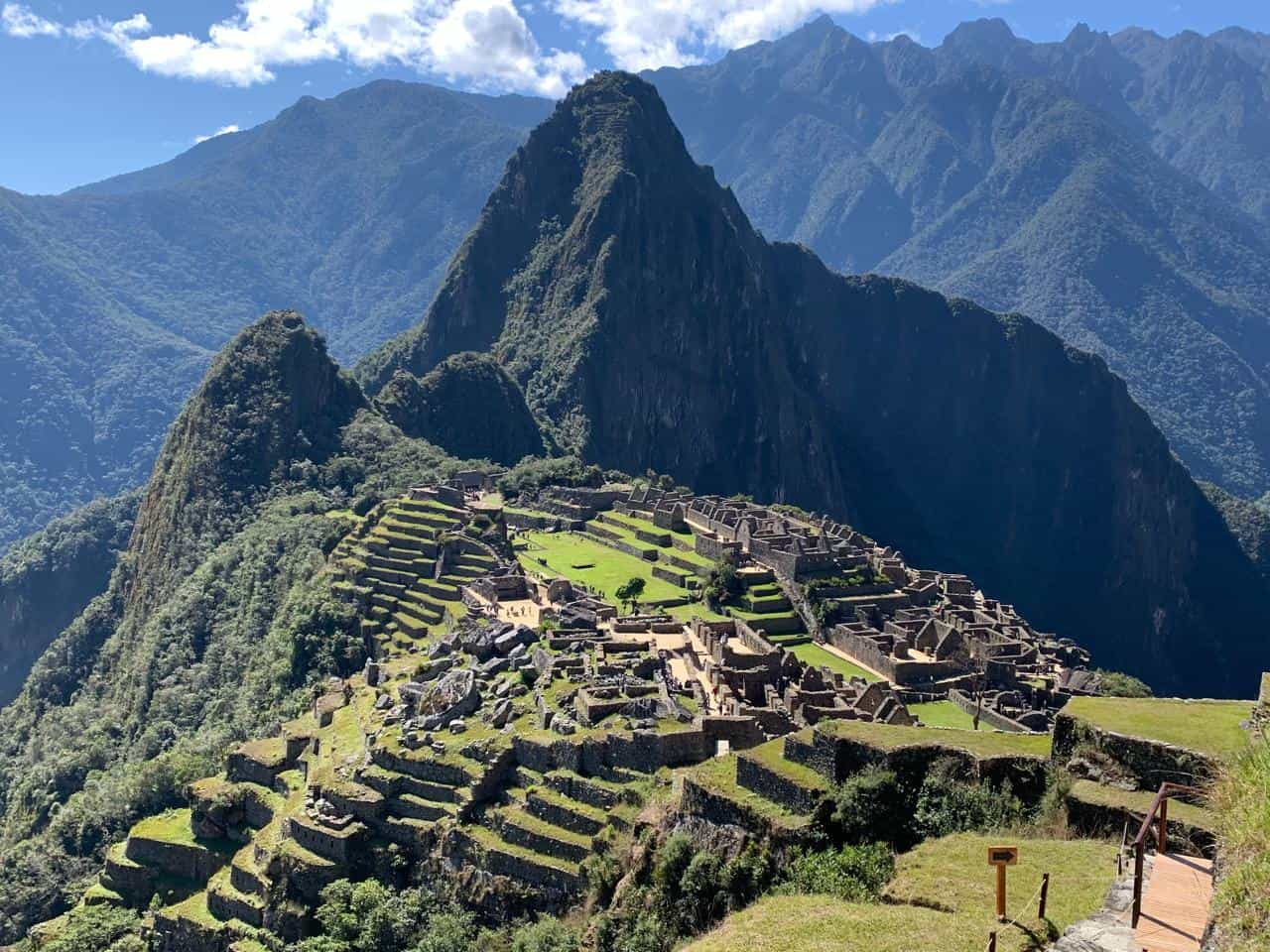
| Machu Picchu | 2,430 m |
| Ollantaytambo | 2,792 m |
| Cusco | 3,399 m |
| Dead Woman’s Pass (Inca Trail) | 4,215 m |
A simple acclimatisation plan:
- Fly Lima to Cusco in the morning and go straight down to Ollantaytambo, about 2 hours by road.
- Spend 1 or 2 nights in Ollantaytambo. Walk slowly, drink water and coca tea, and avoid alcohol on the first night.
- Do a gentle warm-up walk, like our Ollantaytambo Experience through the Inca fortress and up to Ñaupa Iglesia.
- From there you can start your trek or tour almost anywhere. Ollantaytambo is where the train to Machu Picchu and the Inca Trail both begin.
- Visit Cusco at the end of your trip, when your body is ready for the extra height.
We build this idea into tours such as Sacred Valley and Short Inca Trail and Sacred Valley, Machu Picchu and Rainbow Mountain. If you have heart, lung or blood pressure problems, talk to your doctor before you travel.
Safety in Cusco and Ollantaytambo
When Australians ask me if Peru is safe, I always start with Cusco and Ollantaytambo. Are calm, friendly places where travellers walk around day and night. Ollantaytambo in particular is a small Andean town where families still live inside the original Inca streets. Most problems are small and easy to avoid with common sense.
- Taxis: use a taxi your hotel books, or a ride-hailing app. Don’t flag down unmarked cars at night.
- Phones and bags: keep your phone in a front pocket in busy markets such as San Pedro and on crowded streets.
- Drinks: only drink sealed, branded bottles. Smartraveller warns about spiked and methanol-laced drinks, especially in nightlife areas.
- Night buses: for long distances in Peru, fly or take a day bus, and keep your passport and valuables on you.
- Ayahuasca: Smartraveller advises caution with ayahuasca retreats. Avoid unknown offers in the street.
- Respect sacred sites: disrespectful behaviour at Inca sites is against Peruvian law, and so is taking stones or artefacts home.
- Carry ID: keep a photo of your passport on your phone and the original in your day pack.
In an emergency, call police on 105, or iPerú tourist assistance on +51 1 574 8000. The Australian Consulate in Cusco gives limited help, and the 24-hour Consular Emergency Centre is +61 2 6261 3305.
Tips for the Classic Inca Trail (4 days)
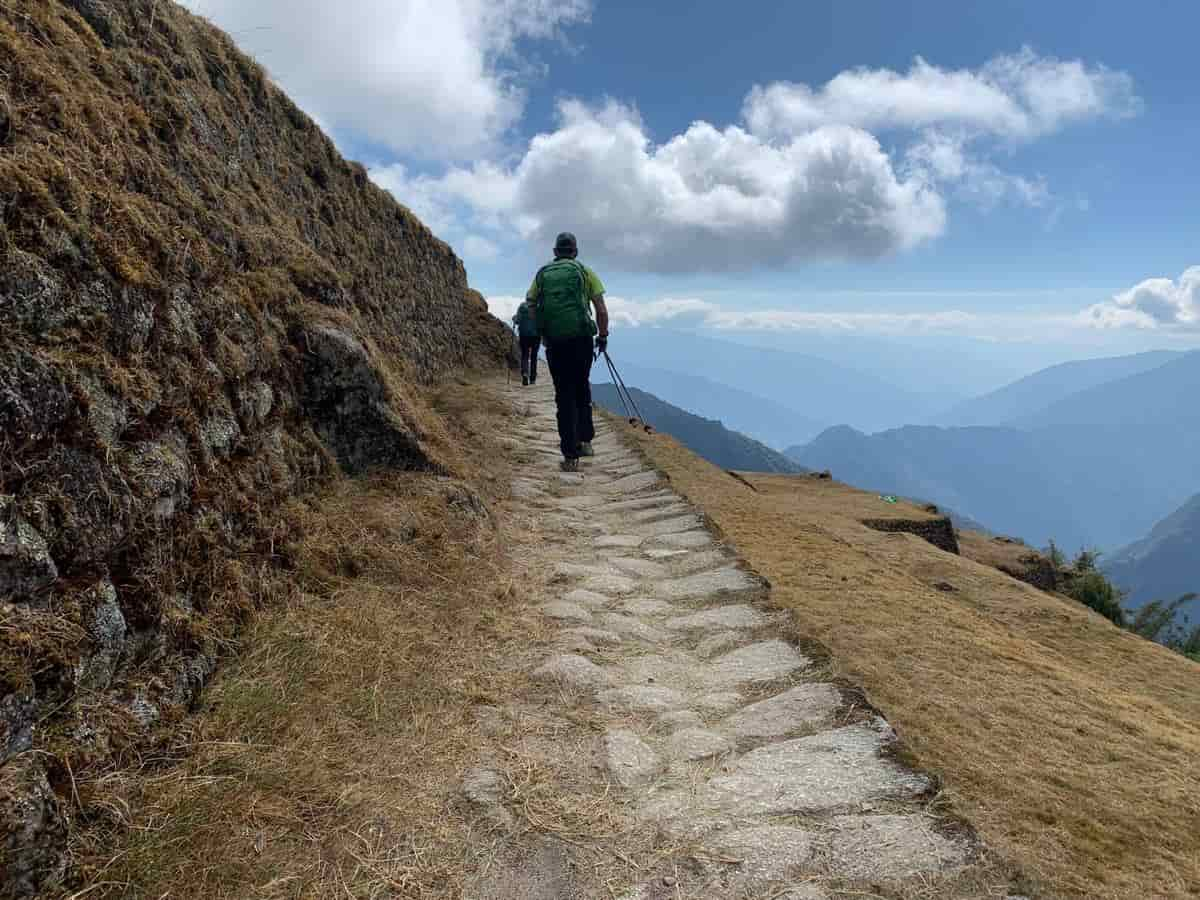
The Classic Inca Trail is about 43 km over 4 days. It starts at Km 82 near Ollantaytambo and ends at the Sun Gate above Machu Picchu. Most reasonably fit people can do it with good preparation.
- Book early. Permits are limited to 500 people a day, including porters and guides. For June to August, book at least six months ahead. Read our Inca Trail 4 days 2027 guide for permit dates.
- Bring your original passport. It is checked at the start of the trail and must match your permit.
- Acclimatise for at least 2 nights before the trek, ideally in Ollantaytambo. Day 2 climbs to Dead Woman’s Pass at 4,215 m.
- Go slowly on day 2. Short steps, steady breathing, and stop to enjoy the view. It is not a race.
- Pack for four seasons. Nights at camp can be close to freezing, while afternoons in the cloud forest are warm and humid. Bring a warm jacket, a rain jacket and a sun hat.
- Use walking poles with rubber tips. Metal tips are not allowed because they damage the Inca stones.
- Bring insect repellent and sunscreen. The lower sections have biting sandflies.
- Carry small cash in soles for snacks, toilets on the trail and tips for your porters and cook.
- Bring a headlamp. On day 4 you start before dawn to reach the Sun Gate early.
- Leave only footprints. Take your rubbish with you and stay on the trail.
Tips for the Short Inca Trail (2 days)
The Short Inca Trail is a great choice if you have less time or the 4-day permits are sold out. You take the train from Ollantaytambo to Km 104 and walk about 12 km. On the way you pass Chachabamba and Wíñay Wayna, and you arrive at Machu Picchu through the Sun Gate.
- It is a full day. Expect about 7 hours of walking, with plenty of stone steps going up to Wíñay Wayna.
- Altitude is lower. The highest point is about 2,700 m, so it is a good option if you are worried about the altitude.
- Start from Ollantaytambo. Sleeping there the night before means a later wake-up and better acclimatisation than leaving Cusco at 4 am.
- Carry 2 litres of water, snacks, sunscreen, insect repellent and a rain jacket. There are few places to buy anything on the trail.
- Permits are still required. The 2-day trail is part of the official Inca Trail network, so you need your passport and a licensed operator.
- Pace yourself for day 2. You return to Machu Picchu the next morning for the guided tour, so save some energy.
Not sure which one suits you? Compare both in our Short Inca Trail vs Classic Inca Trail guide. You can also combine the short trail with a trek, like the Lares Trek and Short Inca Trail.
Best time to go, the February closure, strikes and trains
The dry season, May to September, is the best time to trek. The Australian school summer holidays fall in Peru’s rainy season, which runs from November to May.
- Travelling in December or January? You can still hike. Expect afternoon rain, pack a good rain jacket and keep flexible plans. Your operator should watch the trail conditions every day.
- February closure: the Inca Trail closes every February for maintenance. Alternatives include the Inca Quarry Trail, which needs no Inca Trail permit, and the Moonstone Trek. You can also take the train to Machu Picchu, which stays open.
- Strikes and protests: they can stop trains and roads to Machu Picchu, sometimes at short notice. Leave a buffer day before your international flight, and book with a local operator who can change your plans fast.
- Trains: the train is the main way to reach Machu Picchu. Keep your ticket and passport together, because both are checked at boarding.
How to choose a safe trekking operator
Smartraveller warns that adventure operators in Peru are not always regulated. Before you book, check that your operator has:
- An official tour operator licence and a registered company number (RUC)
- Licensed, experienced local guides who speak good English
- Emergency oxygen and a first-aid kit on every trek
- A clear plan for evacuation, strikes and bad weather
- Fair treatment of porters, with safe loads and proper equipment
- Real, recent reviews from other travellers
Travel insurance: make sure your policy covers trekking up to 4,300 m, medical care and evacuation. Smartraveller is clear that the Australian Government will not pay these costs for you.
At Inca Trail Classic we are a licensed, 100% local and indigenous operator based in Cusco. Our team has guided more than 1,000 travellers, and every trek carries oxygen and first aid.
FAQ for Australian travellers
Is Peru safe for Australians in 2027? Yes, for the main tourist route of Lima, Cusco, the Sacred Valley and Machu Picchu. Follow Smartraveller’s advice, use booked taxis and trek with a licensed local operator.
Do Australians need a visa for Peru? No. Australians get up to 90 days on arrival as tourists. Your passport needs at least 6 months’ validity.
Is Cusco safe for tourists? Yes. Cusco is one of the most visited and relaxed cities in Peru. Use booked taxis, watch your phone in crowds and drink only sealed drinks.
Do I need a yellow fever vaccine for Machu Picchu? There is no yellow fever in Cusco city or Ollantaytambo. Since 2025 the CDC also lists Machu Picchu in its travel notice, because the route passes through lower valleys, so ask your travel doctor. If you visit the Amazon, get vaccinated at least 10 days before.
Will I be asked for a yellow fever certificate when I return to Australia? You must declare if you were in Peru in the last six days, and you may be asked to show your certificate.
How do I avoid altitude sickness? Sleep in Ollantaytambo (2,792 m) for 1 or 2 nights before going higher, drink plenty of water and go slowly. Visit Cusco at the end of your trip.
When is the Inca Trail closed? Every February, for maintenance. Machu Picchu stays open, and you can reach it by train or on alternative treks.
Is the 2-day Inca Trail easier than the 4-day? Yes. It is about 12 km in one day with a highest point of about 2,700 m, compared with 43 km and 4,215 m on the classic route.
Plan your Peru trip with a local guide
So, is Peru safe for Australians? With good planning and a local team, absolutely. The official advice is there to keep you safe, and with the right plan it should not stop you from seeing Machu Picchu. Start low in Ollantaytambo, sort out your vaccines and insurance, and trek with a licensed local team
Book directly with a Cusco operator and you deal with the people who actually guide you, with no middleman. Message us on WhatsApp at +51 954 400 642 or email [email protected], and we will help you build an itinerary that fits your dates, fitness and holiday time.
Useful official links:
- Smartraveller: Peru travel advice
- Australian Department of Health: yellow fever
- CDC Yellow Book: Peru
- UNESCO: Historic Sanctuary of Machu Picchu
Written by Ronald Troncoso, a local guide from Ollantaytambo with 15+ years guiding the Inca Trail, Salkantay and Lares.