2-Day Inca Trail to Machu Picchu: The Complete Route Guide
2 Day inca trail, If you only have a couple of days but still want to say you hiked the real Inca Trail not just visited Machu Picchu by train the 2-Day Inca Trail is the route that delivers exactly that. It’s short enough to fit into almost any itinerary, but it still ends the way every Inca Trail hiker dreams of: walking through the Sun Gate at dawn, watching Machu Picchu appear below you for the first time.
Here’s everything you need to know before you go — the route, the distances, what you’ll actually see, where to get the best photos, which Machu Picchu circuits to walk, and exactly what’s included so there are no surprises on the trail.
If you only have a couple of days but still want to say you hiked the real Inca Trail — not just visited Machu Picchu by train — the 2-Day Inca Trail is the route that delivers exactly that.
Quick Facts
| Detail | Information |
|---|---|
| Distance | 12 km (7.5 miles) |
| Duration | 2 days / 1 night |
| Starting point | Km 104, by train from Ollantaytambo |
| Lowest elevation | 2,100 m (Km 104) |
| Highest elevation | 2,720 m (Sun Gate / Inti Punku) |
| Difficulty | Moderate |
| Permit required | Yes, limited daily availability |
The Route, Step by Step
The 2-Day Inca Trail doesn’t start in Cusco or Ollantaytambo on foot it starts on the train. You’ll board a train from Ollantaytambo to a stop known as Km 104, a small checkpoint along the railway line that also happens to be the official starting point of this route. This is where your permit gets checked and stamped, so keep your original passport handy copies aren’t accepted here. If you’re traveling from the UK or Australia, it’s worth checking your government’s latest travel advisory for Peru before you go.
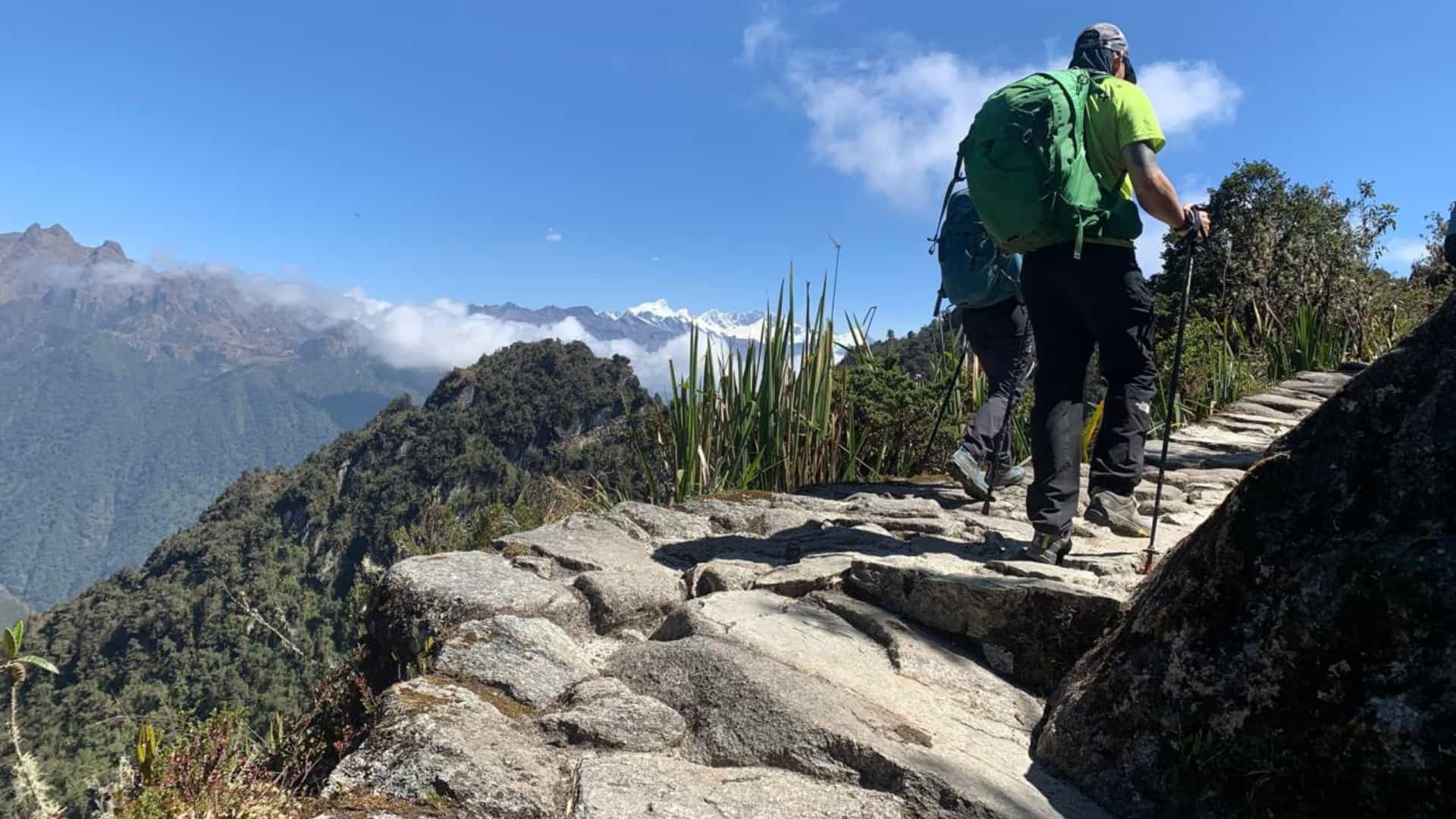
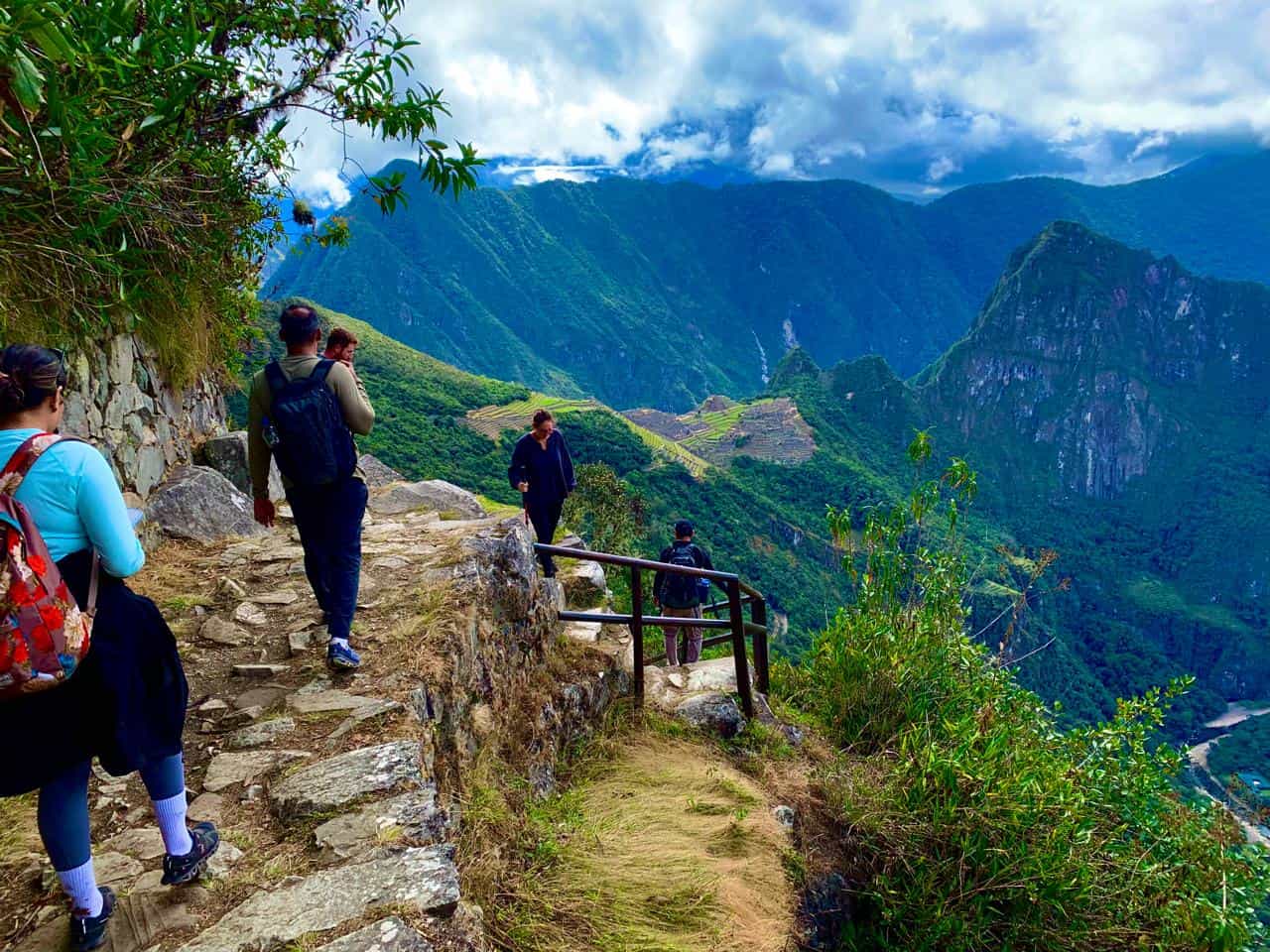
From Km 104, the trail climbs gradually along the original Inca stone path, following the Urubamba River valley before turning uphill into the cloud forest. Unlike the Classic 4-Day Inca Trail, this route skips the high mountain passes entirely there’s no Dead Woman’s Pass here — which is exactly why it’s accessible to a much wider range of fitness levels while still being a genuine, historic Inca trail.
What You’ll See Along the Way
Chachabamba — Shortly after starting, you’ll pass this smaller archaeological site, believed to have served a ceremonial and agricultural purpose, with terraces built into the hillside overlooking the river below. It’s a good early stop to catch your breath and take in the first real Inca stonework of the hike.
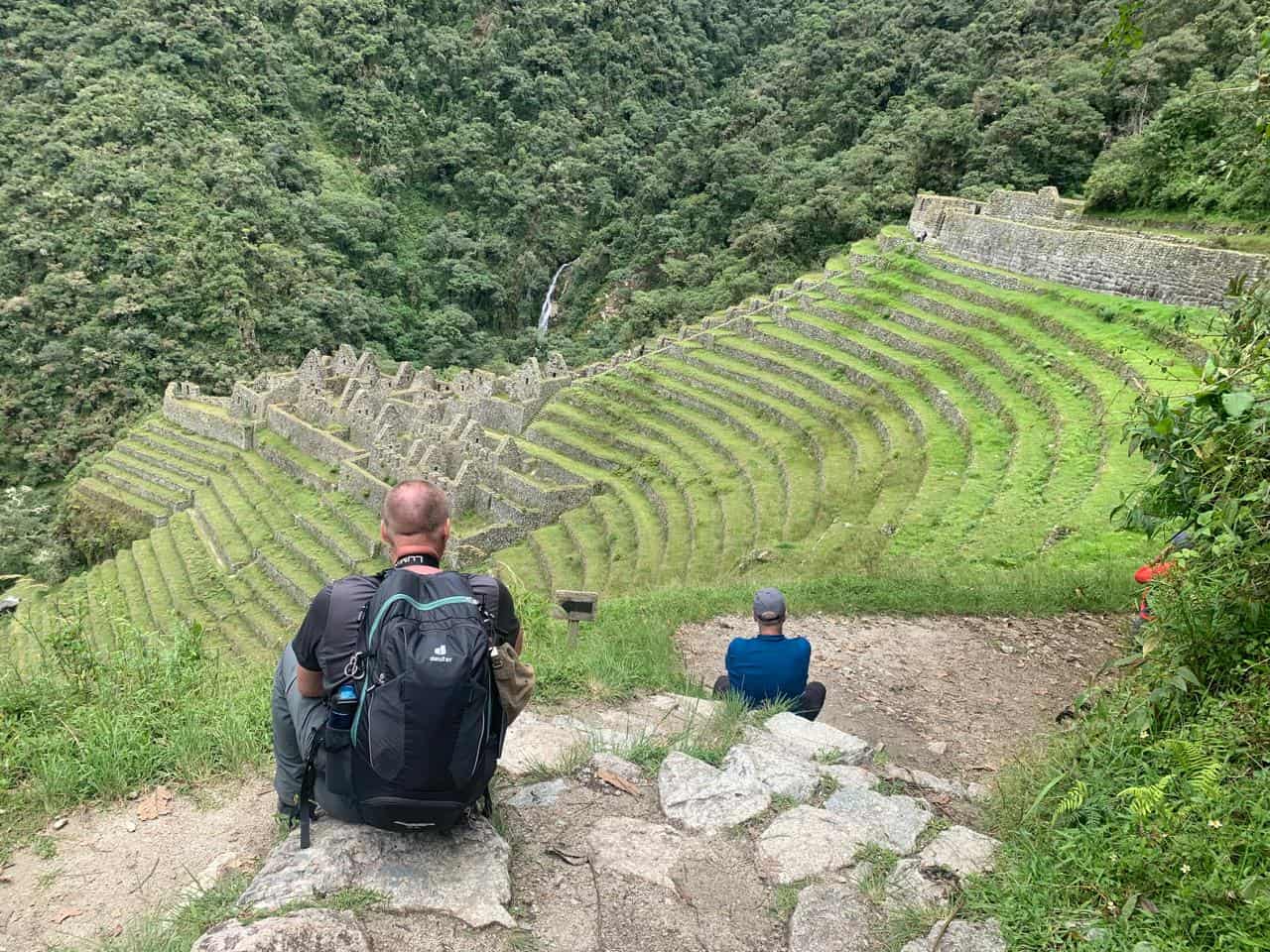
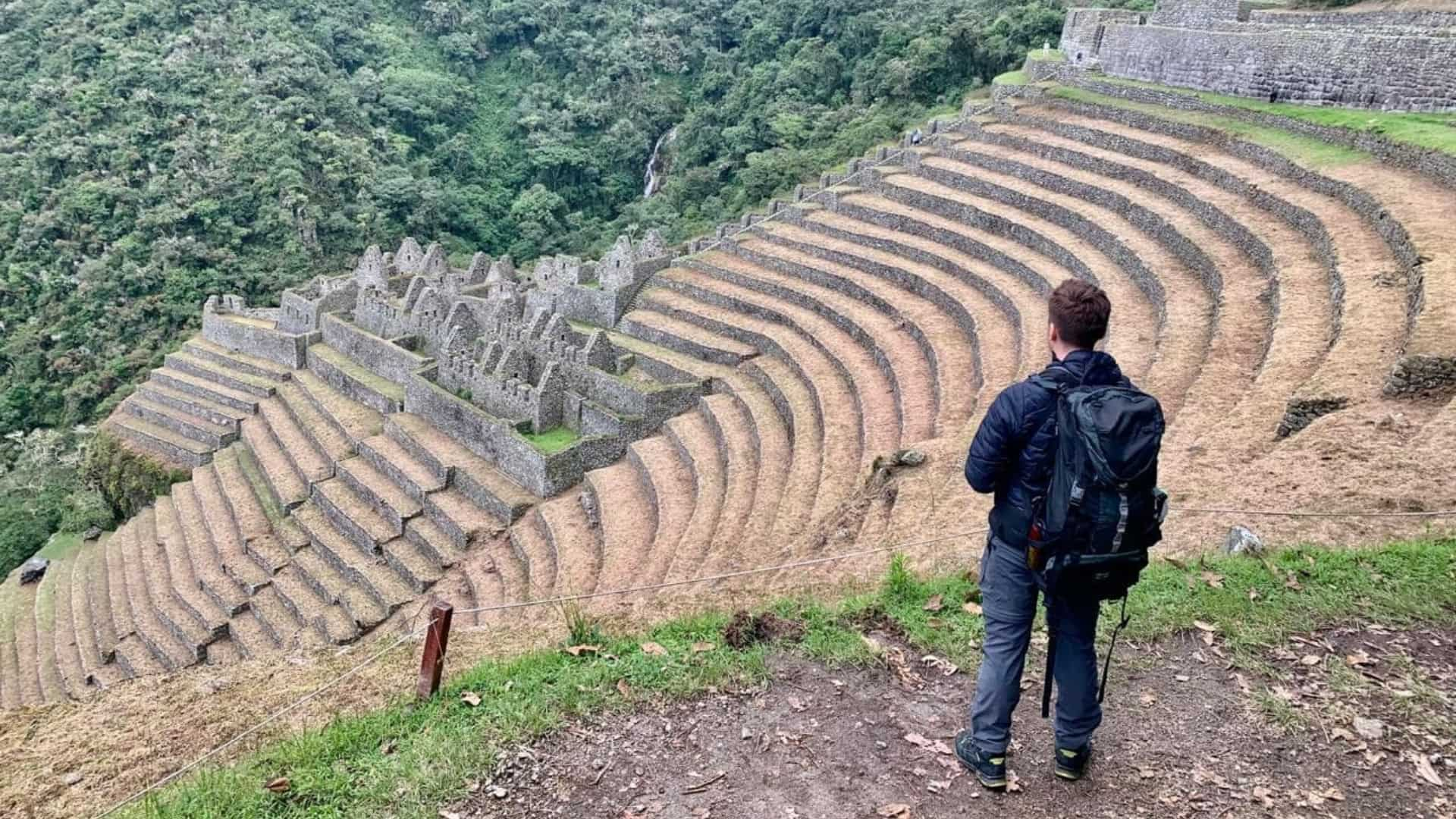
Wiñay Wayna — This is the highlight of the entire route, and arguably one of the most impressive Inca sites outside Machu Picchu itself. The name means «Forever Young» in Quechua, and the site is famous for its dramatic agricultural terraces cascading down the mountainside, along with a ceremonial center and a series of ritual baths fed by natural springs. Most hikers spend 20–30 minutes here exploring and taking photos before continuing it’s worth every minute.
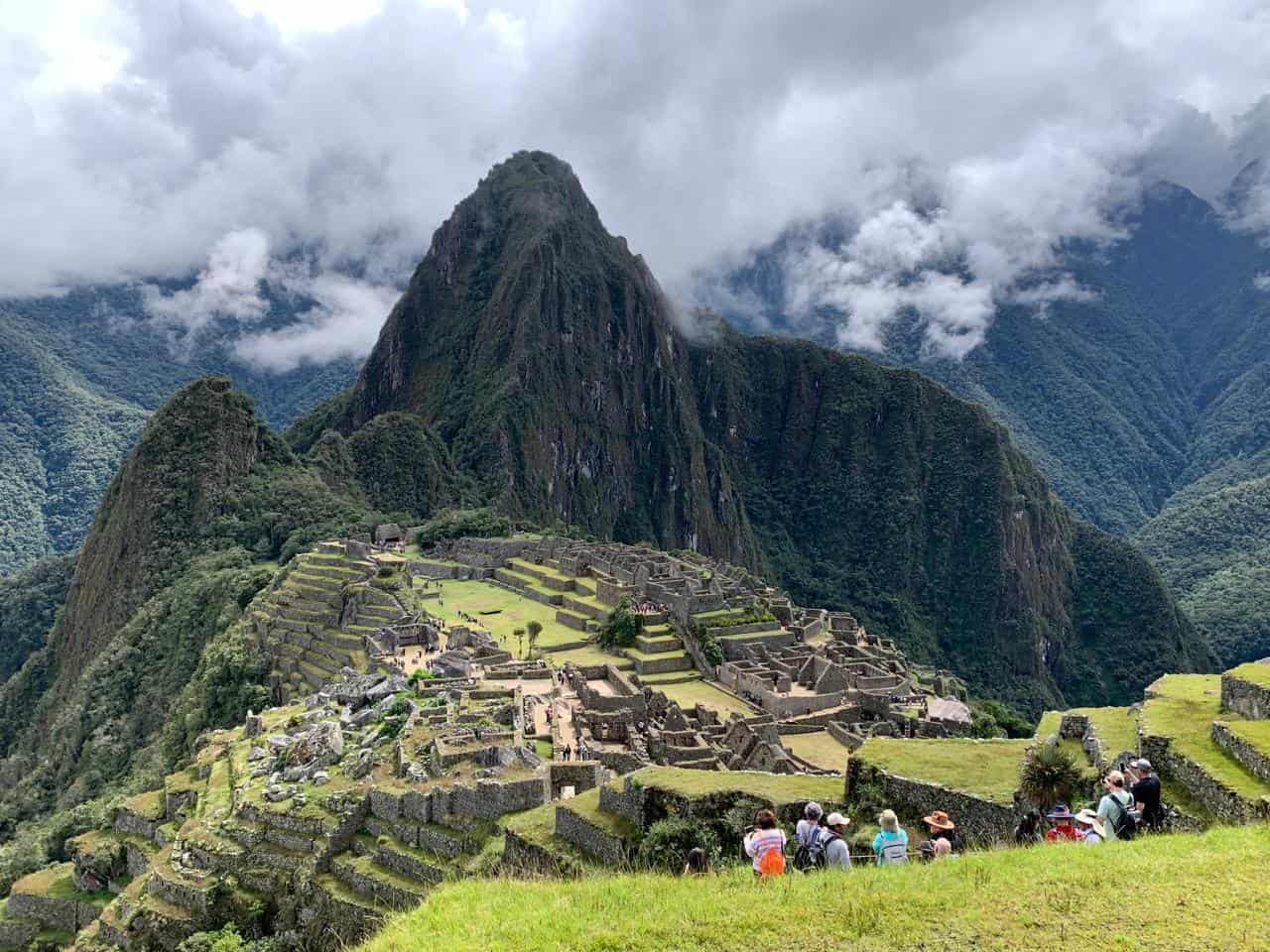
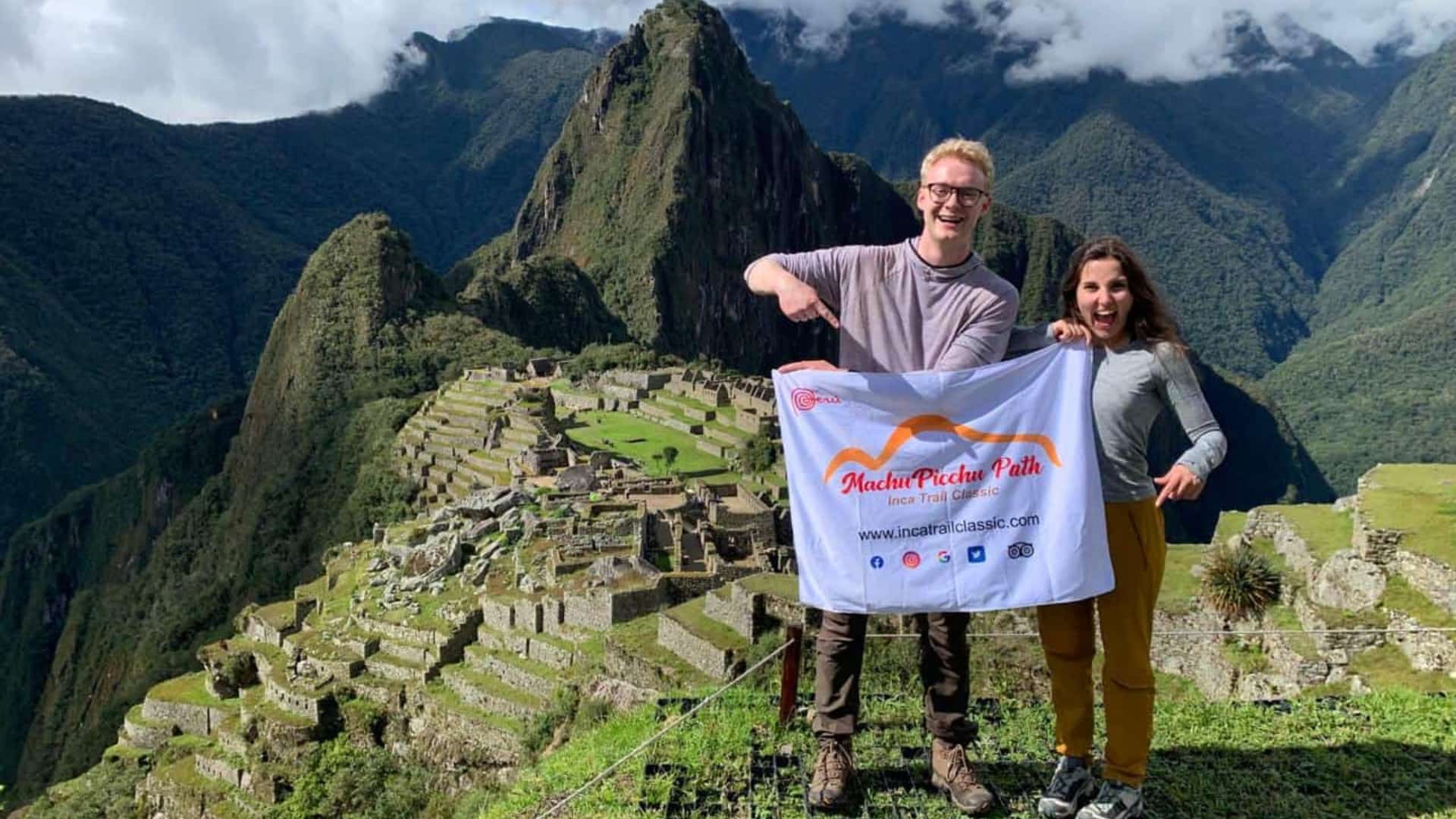
The Sun Gate (Inti Punku) — The emotional peak of the trek, literally and figuratively. This stone gateway was the original ceremonial entrance to Machu Picchu, used by the Incas themselves, and it’s still the only way to arrive at the citadel exactly as they intended. From here, you get your first full view of Machu Picchu spread out below, with Huayna Picchu rising behind it. Hikers doing the Classic 4-Day Trail arrive here at sunrise; on the 2-Day route, your arrival time depends on your train schedule, but even in full daylight, this moment rarely disappoints.
Where to Take the Best Photos
If photography matters to you on this trek (and for most people, it does), here’s where to slow down:
- Wiñay Wayna terraces, shooting from the upper platform looking down this captures the full sweep of the agricultural terraces with the valley behind them.
- The Sun Gate itself, framing Machu Picchu through the stone doorway this is the single most iconic shot of the entire Inca Trail system, and for good reason.
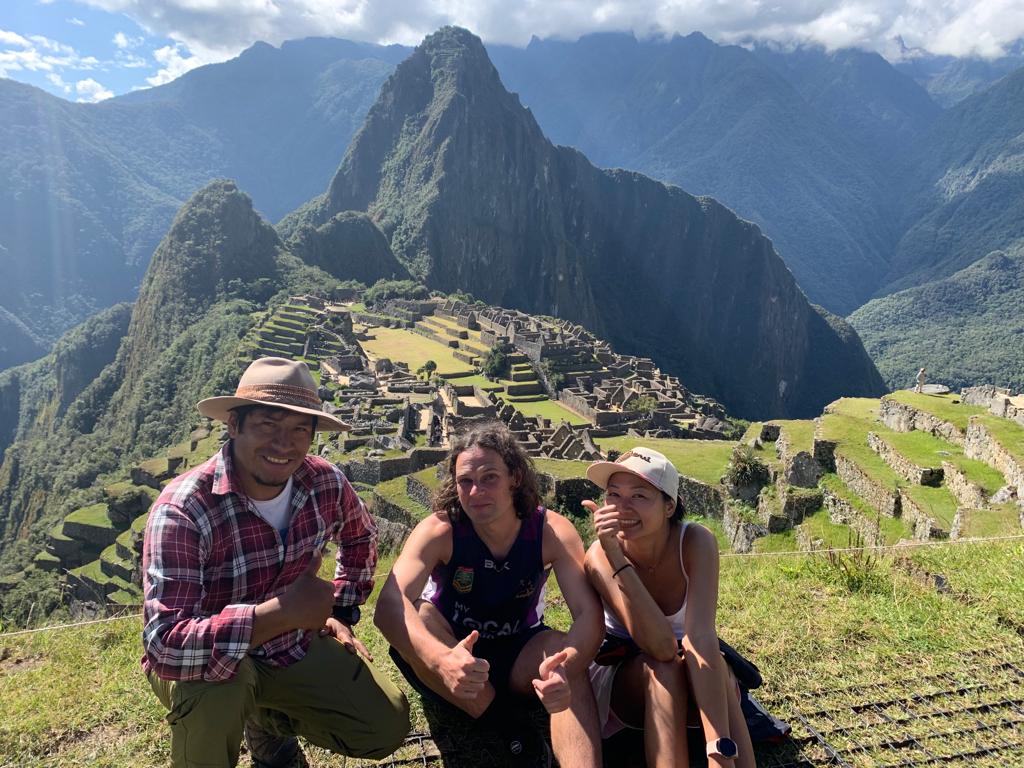
- The classic Machu Picchu overlook, just past the Sun Gate as the trail descends toward the citadel — this is where you get the postcard view with Huayna Picchu in the background, before you even reach the entrance.
- Inside the citadel, from the Guardian’s Hut (Casa del Guardián) this is the same elevated viewpoint used in almost every professional photo of Machu Picchu, and it’s accessible without extra tickets.
Golden hour light (early morning or late afternoon) makes a significant difference here if your train schedule gives you any flexibility, aim to be walking the final stretch to the Sun Gate when the light is soft rather than at harsh midday sun.
Which Machu Picchu Circuits You’ll Walk
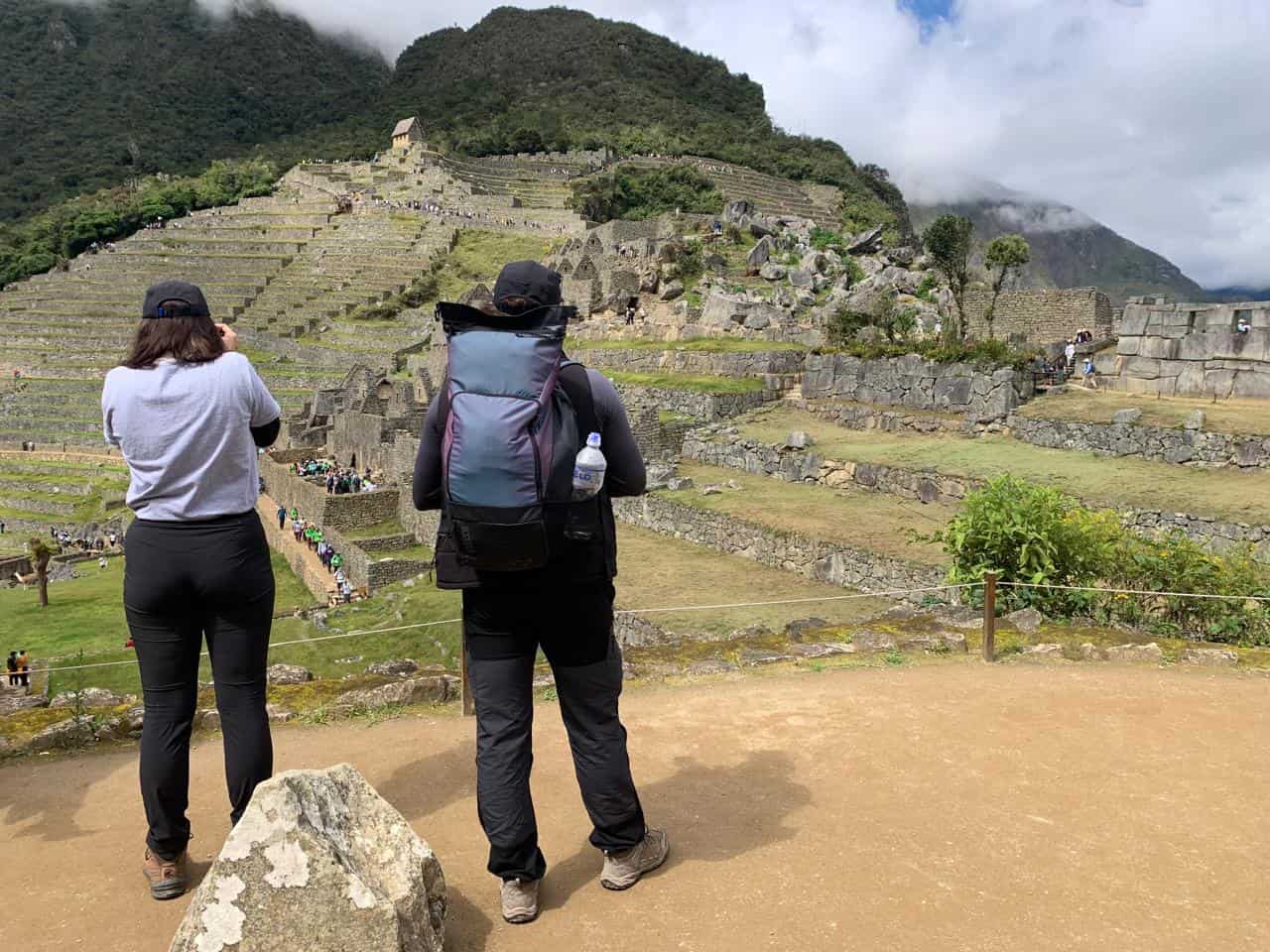
Once you arrive at the citadel, entrance is organized into fixed circuits set by the Ministry of Culture you can’t simply wander freely anymore. The 2-Day Inca Trail typically includes access to Circuits 1 and 3 (sometimes referred to as the long and classic routes), which together cover:
- The Guardian’s Hut viewpoint (the classic postcard shot)
- The main urban sector, including the Temple of the Sun, the Royal Tomb, and the Sacred Plaza
- The Intihuatana stone, an astronomical carved rock believed to have ritual significance
- The residential and agricultural terraces throughout the site
These circuits give you a thorough, well-rounded Visit to Machu Picchu most important structures without the extra permits and separate hike required for Huayna Picchu or Machu Picchu Mountain (those require booking well in advance and are not included by default).
Does It Include Tickets? What’s Actually Included
This is one of the most common questions, so here’s a clear breakdown of what a proper 2-Day Inca Trail package should include:
Included:
- Inca Trail permit (government-issued, non-transferable)
- Machu Picchu entrance ticket (Circuits 1 & 3)
- Train tickets to and from Km 104
- Professional guide
- One night’s accommodation (typically in Ollantaytambo or the Sacred Valley, depending on the itinerary)
- Meals as specified in your itinerary
Usually NOT included, unless stated otherwise:
- Huayna Picchu or Machu Picchu Mountain tickets (separate permits, book months ahead)
- Tips for guides and support staff
- Travel insurance
- Alcoholic beverages and personal expenses
Always confirm exactly what’s bundled into your specific tour before booking this varies between operators, and it’s the single easiest way to avoid an unpleasant surprise on the trail.
Permits: The Detail That Catches People Off Guard
Unlike the Classic 4-Day Inca Trail, the 2-Day version has its own separate, limited daily permit allocation but it’s just as real, and just as easy to sell out during high season (May–September). If your trek dates are flexible, book at least 2–3 months ahead. If you’re traveling during peak months or over a holiday period, earlier is safer. Permits are tied to your passport and cannot be transferred to another traveler once issued.
How Much Does the 2-Day Inca Trail Cost?
Pricing for the 2-Day Inca Trail typically ranges from $500 to $700 USD per person, depending on the operator, group size, and what’s bundled into the package. Budget tours toward the lower end often mean larger groups and fewer inclusions (you may need to arrange your own hotel night or pay for Huayna Picchu separately), while mid-range operators like Our Locally-run 2-Day Short Inca Trail tour $500 package usually include the full package: permit, train, guide, one night’s accommodation, and Machu Picchu entrance in one price.
Rather than choosing based on price alone, it’s worth checking exactly what’s included before comparing numbers side by side two «similar» $600 tours can look very different once you factor in group size, accommodation quality, and whether Huayna Picchu access is even offered as an add-on.
Why Choose the 2-Day Inca Trail Over Other Options?
If you’re weighing this route against the alternatives, here’s what makes it worth considering:
Versus the Classic 4-Day Inca Trail: You get the same emotional payoff walking through the Sun Gate, the original Inca stonework, the history — without needing four days off, four nights of camping, or the months-of-advance booking that the Classic Trail’s limited permits demand.
- Versus visiting Machu Picchu purely by train: You still get to hike a genuine section of Inca Trail, passing real archaeological sites like Wiñay Wayna, and you arrive at Machu Picchu the way the Incas designed it to be experienced on foot, through the Sun Gate rather than stepping off a bus at the main entrance.
- For travelers short on time: If your trip to Peru only allows a day or two for Machu Picchu, this route packs in the trekking experience, the history, and the iconic arrival, all within a schedule that fits around flights, other destinations, or a tighter vacation window.
In short: it’s the route for travelers who want the real Inca Trail story not a shortcut, but a smart, time-efficient way to live it.
Sample Hour-by-Hour Itinerary
Every operator’s schedule varies slightly depending on train times, but here’s a realistic breakdown of what a typical day looks like:
Day 1:
- 5:00–6:00 AM: Pickup from your hotel in Cusco or the Sacred Valley
- Morning: Transfer to Ollantaytambo, boarding the train toward Km 104
- Mid-morning: Arrival at Km 104, permit and passport check at the trail entrance
- Late morning to afternoon: Hike begins — Chachabamba, then the climb toward Wiñay Wayna
- Afternoon: Explore Wiñay Wayna, continue toward the Sun Gate
- Late afternoon: Arrive at your overnight accommodation (Aguas Calientes or a hotel along the route, depending on your specific itinerary)
Day 2:
- Early morning: Transfer to the Machu Picchu entrance
- Morning: Guided tour of the citadel (Circuits 1 & 3), roughly 2–2.5 hours
- Late morning: Free time to explore independently or take photos from the Guardian’s Hut
- Afternoon: Return by bus to Aguas Calientes, lunch, then train back to Ollantaytambo
- Evening: Transfer back to Cusco
(Some itineraries reverse the order hiking to the Sun Gate and directly into Machu Picchu the same afternoon, then touring the citadel in depth the next morning. Confirm the exact structure with your operator, since both versions exist.)
How Physically Demanding Is It, Really?
«Moderate difficulty» can mean different things depending on who you ask, so here’s what that actually translates to on this route:
- You’ll gain roughly 620 meters (2,000 ft) of elevation over the 12 km hike, mostly on stone steps rather than a smooth trail, which is harder on the legs than the distance alone suggests.
- Most hikers complete it in 6–7 hours of walking time, not counting stops.
- There’s no technical climbing and no extreme altitude (you stay below 2,720 m the entire hike, well under the Classic Trail’s 4,215 m pass), but the combination of humidity, stone steps, and sustained uphill sections means a baseline level of fitness regular walking or light cardio — makes a real difference in how much you enjoy it versus how much you suffer through it.
- If you’ve acclimatized properly in Cusco beforehand, altitude generally isn’t the limiting factor on this particular route, leg fatigue is.
Weather and Best Time to Go
- Dry season (May–September): The most popular window clear skies, minimal rain, but also the busiest trail and highest prices. Mornings can be cool; carry a light layer.
- Shoulder season (April, October): A good compromise, fewer crowds, generally still favorable weather, though rain becomes more likely.
- Wet season (November–March): Warmer temperatures but frequent afternoon showers, and the trail can get muddy and slippery on the stone steps. A proper rain jacket isn’t optional here. Note that the Classic 4-Day Trail closes entirely every February for maintenance the 2-Day route generally remains open, making it one of the few ways to experience genuine Inca Trail hiking that month.
Frequently Asked Questions
- Can I do the 2-Day Inca Trail without a guide? No. Like all Inca Trail permits, this route requires a licensed, accredited guide by law — independent hiking isn’t permitted on this section of trail.
- Is there phone signal or connectivity along the route? Signal is inconsistent to nonexistent for most of the hike, improving again once you’re near Aguas Calientes. Treat it as a full digital break.
- What happens if my train is delayed? Delays happen occasionally. A good operator builds buffer time into the schedule, but it’s worth discussing contingency plans with your guide before departure, especially if you have a tight onward flight.
- Can children or older travelers do this hike? Yes, more easily than the Classic 4-Day Trail — but the stone steps and several hours of sustained walking still require reasonable mobility. If in doubt, discuss it directly with your operator beforehand.
Getting Ready
A few things worth sorting out before you go:
- Acclimatize first. Even though this route skips the highest passes of the Classic Trail, you’ll still be hiking at altitude after arriving in Cusco. Read our guide on how to acclimatize in Cusco before your trek.
- Pack smart. Layers matter more than volume here — check our full Inca Trail packing list for exactly what to bring.
- Book early, especially for dry season dates.
Is the 2-Day Inca Trail Right for You?
If you want the real Inca Trail experience, original stonework, the Sun Gate, the same entrance the Incas used but don’t have four days to spare, this route delivers all of that in a compact, manageable hike. It’s a strong option for travelers short on time, moderately fit hikers, or anyone who wants a taste of the Classic Trail’s history and payoff without its physical demands.
Ready to walk it yourself? Check out our Short Inca Trail Tour to Machu Picchu for full itinerary details and pricing.