The Easy Short Inca Trailto Machu picchu: Ultimate 2026 guide
he Easy Inca Trail to Machu Picchu is one of the best trekking experiences in Peru for travelers who want to reach the Lost City of the Incas without hiking for four days. Also known as the 2-Day Short Inca Trail or Route 05, the Easy Inca Trail to Machu Picchu follows the most spectacular section of the original Inca Trail while requiring less time and a moderate level of fitness.
Unlike the Classic 4-Day Inca Trail, the Easy Inca Trail to Machu Picchu allows you to explore impressive archaeological sites, walk on authentic Inca stone paths, and arrive at the famous Sun Gate (Inti Punku), where you’ll enjoy your first unforgettable view of Machu Picchu. For many travelers, the Easy Inca Trail to Machu Picchu offers the perfect balance between adventure, history, and comfort.
Whether you’re traveling with family, visiting Peru for the first time, or simply looking for a shorter trek, the Easy Inca Trail to Machu Picchu is an excellent choice. This route includes the magnificent ruins of Wiñay Wayna, cloud forest scenery, panoramic mountain views, and an unforgettable entrance to Machu Picchu through the same gateway used by the ancient Incas.
In this complete guide, you’ll discover everything you need to know about the Easy Inca Trail to Machu Picchu, including the detailed itinerary, permit availability, updated prices, difficulty level, what to pack, the best time to hike, train information, and expert travel tips. By the end of this guide, you’ll know exactly why the Easy Inca Trail to Machu Picchu is one of the most popular trekking experiences in South America and how to book your adventure before permits sell out.
What is the Short Inca Trail and why choose it?
The 2-day, 1-night Inca Trail is the condensed version of the historic Qhapac Ñan (the Inca road system) leading to Machu Picchu. It’s ideal for:
- Travelers with limited time in Cusco.
- Families with children or people who prefer a moderate hike.
- Those who wanted the Classic 4-day Inca Trail but found the permits sold out.
- Hikers who want to walk into Machu Picchu, rather than just arriving by train or bus.
Unlike other alternative routes such as Salkantay or Lares, the Short Inca Trail is part of the official network protected by the Peruvian government, which means it’s also subject to a limited daily permit quota.
Step-by-step itinerary
Day 1: Cusco – Km 104 – Wiñay Wayna – Machu Picchu
The day usually starts very early, between 3:30 and 4:00 a.m., with pickup from your hotel in Cusco. From there, you’re transferred to the Ollantaytambo train station, where you’ll board the train toward (Km 104 (Chachabamba), the official starting point of the hike.
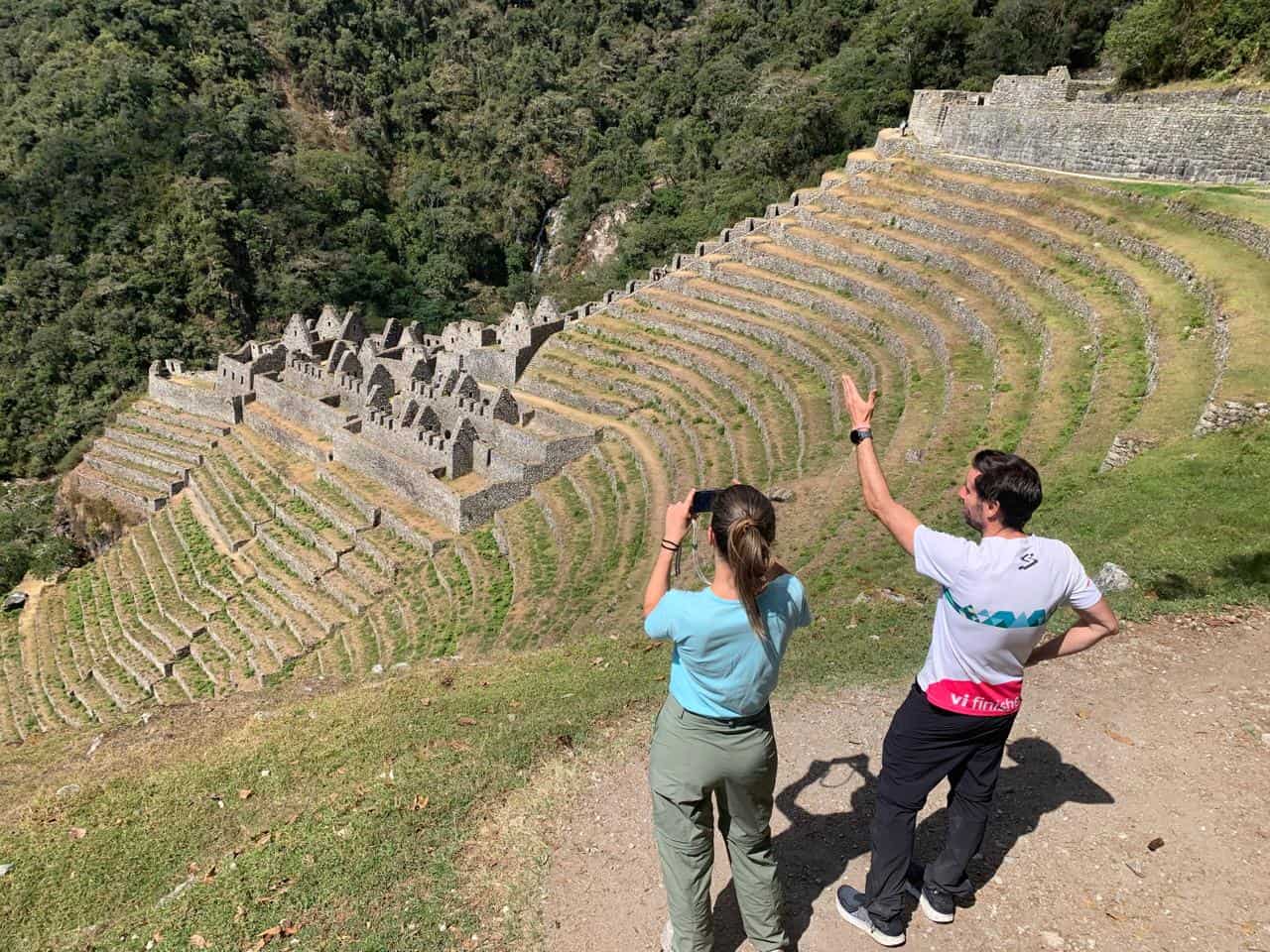
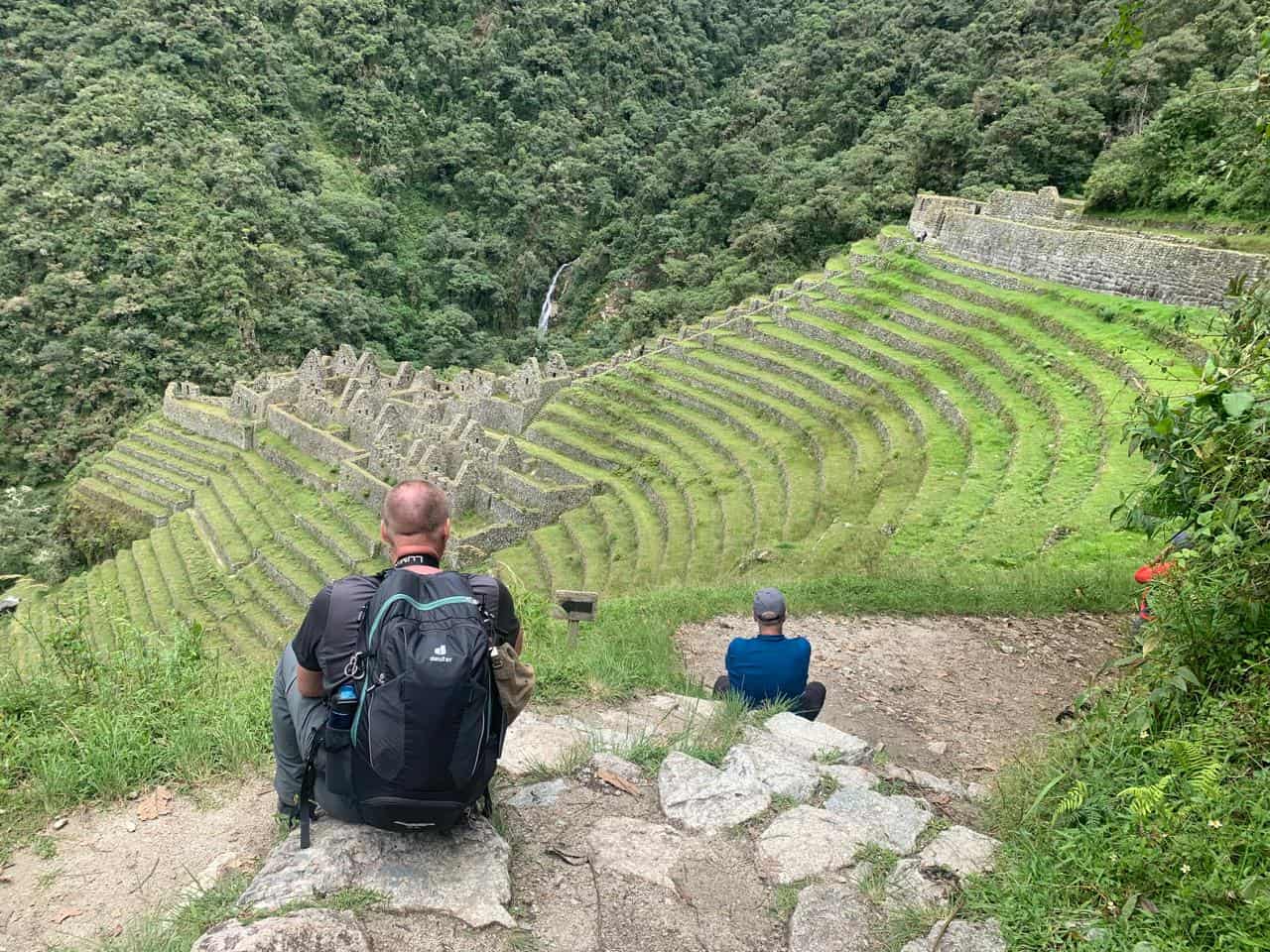
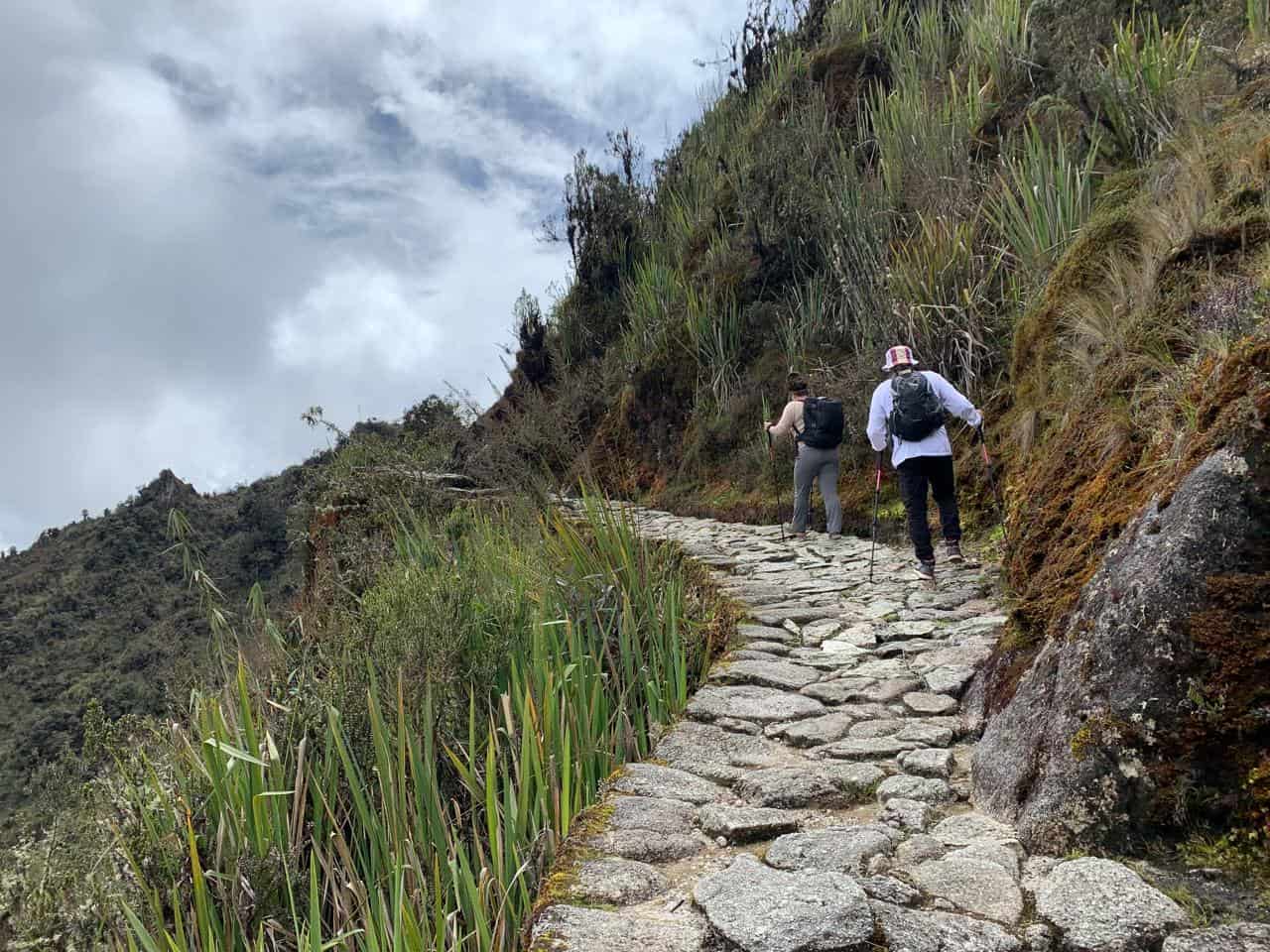
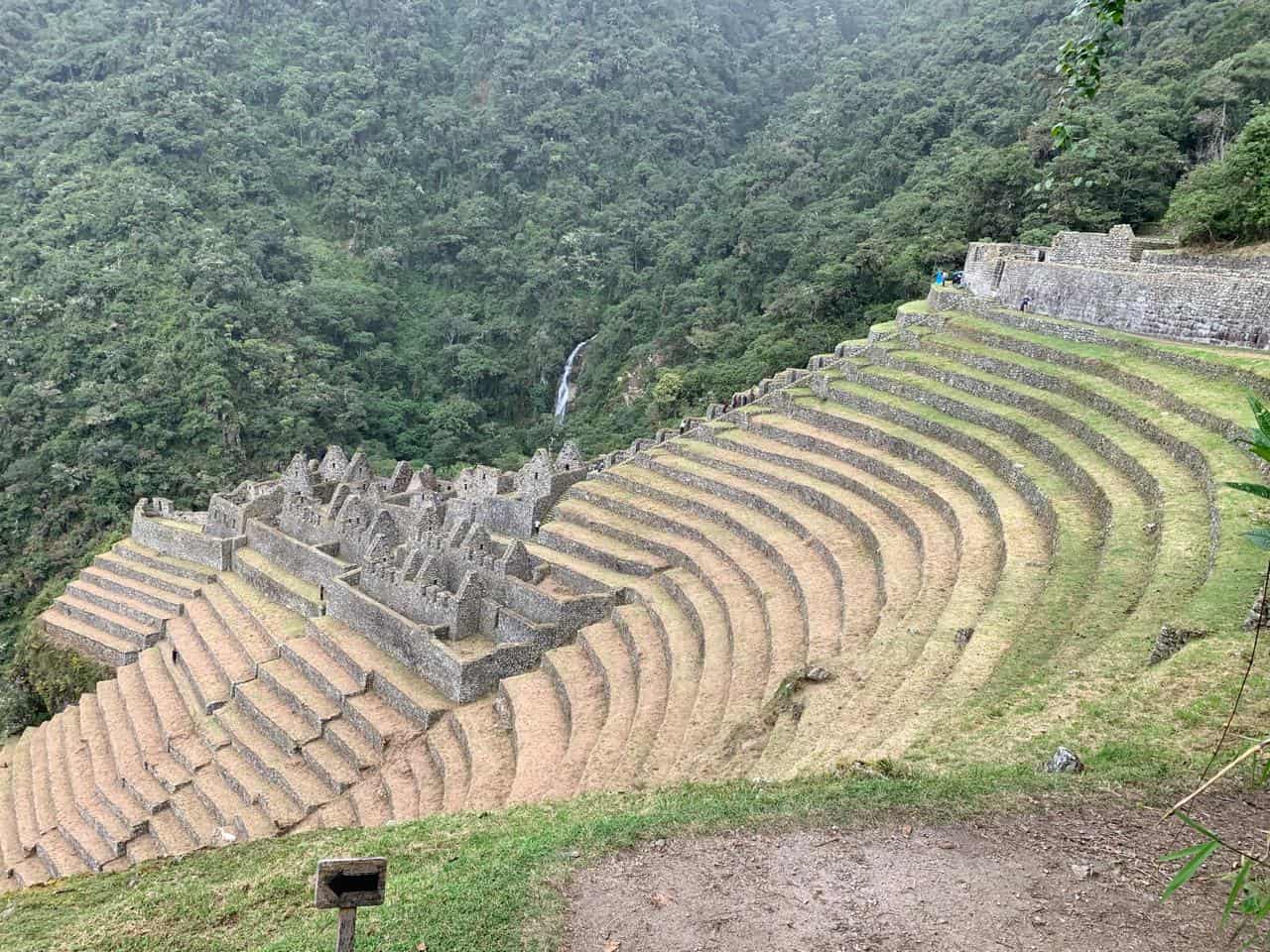
After clearing the permit checkpoint, the ascent begins through a cloud forest trail for approximately 3 hours until reaching the impressive archaeological complex of Wiñay Wayna, famous for its agricultural terraces and ceremonial fountains in remarkable condition.
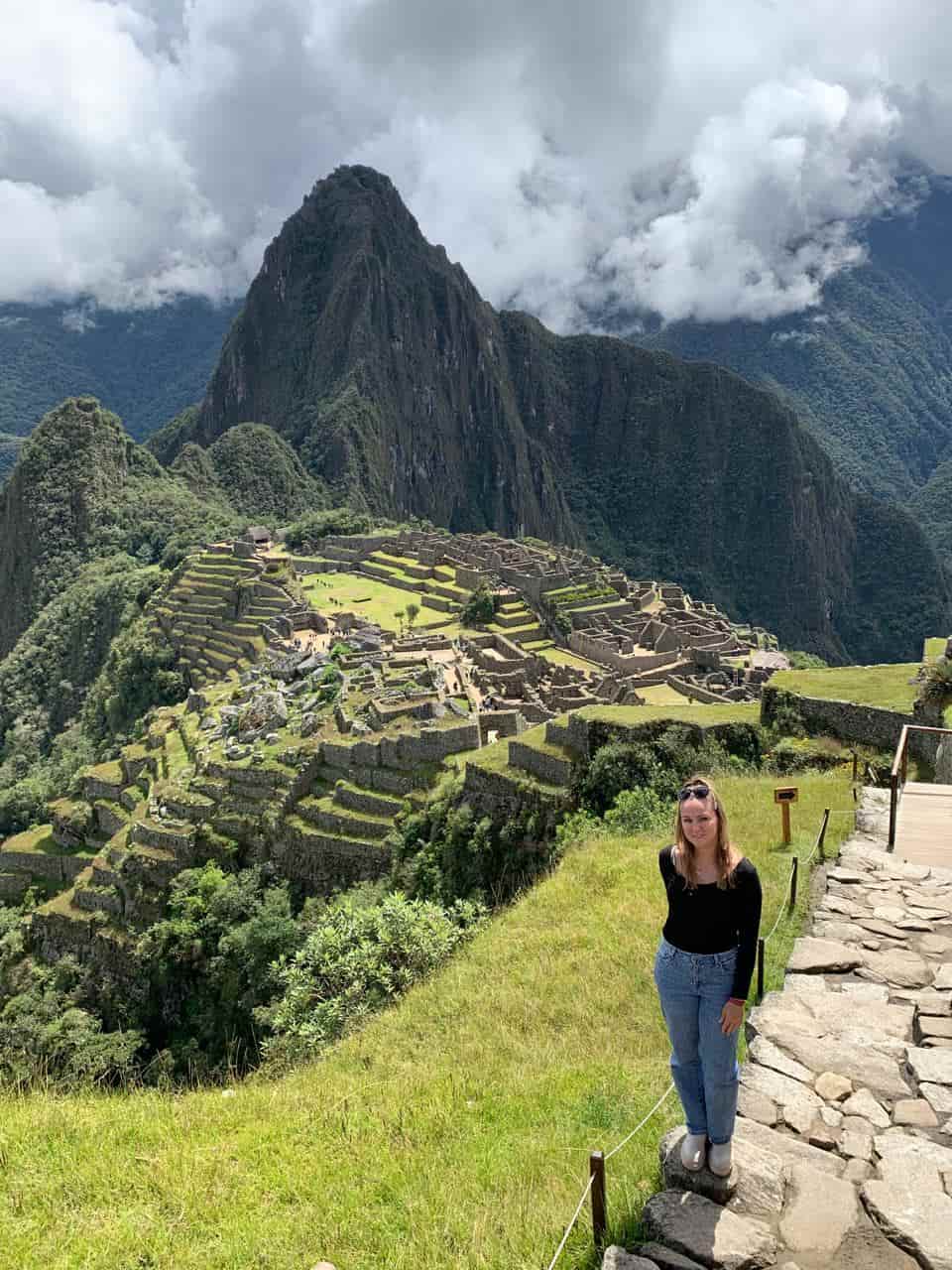
After a short rest and lunch, the hike continues for about 2 more hours until reaching the Sun Gate (Intipunku), offering the first spectacular panoramic view of Machu Picchu. The final descent to the citadel takes around 45 to 50 minutes. Many operators include a first guided visit that same afternoon before heading down to spend the night in Aguas Calientes.
Day 2: Machu Picchu at sunrise – Return to Cusco
The second day is dedicated to a full guided tour of Machu Picchu, generally lasting 2 hours, with an early departure to enjoy the citadel with fewer crowds and better light. After the tour, travelers have free time before taking the bus down to Aguas Calientes and the return train to Ollantaytambo, finally arriving back in Cusco in the afternoon or evening.
How many kilometers is the 2-day Inca Trail?
The exact distance varies slightly depending on the operator and measurement point, but in general the Short Inca Trail covers between 10 and 14 kilometers, almost entirely concentrated on the first day. The hike typically takes between 5 and 7 hours of active trekking, at a relaxed pace that allows time to enjoy the landscape and the archaeological sites along the way. The second day involves essentially no additional hiking, since it’s dedicated to the guided visit of Machu Picchu.
Altitude of the Short Inca Trail: what you need to know
Altitude is one of the factors that generates the most questions among travelers, and for good reason: it’s a key factor in the route’s real difficulty level.
- Starting point (Km 104 / Chachabamba): approximately 2,100 – 2,200 meters above sea level (6,890 – 7,218 ft).
- Highest point (Wiñay Wayna / Intipunku): between 2,700 and 2,730 meters (8,858 – 8,957 ft).
- Machu Picchu: 2,430 meters (7,972 ft).
Unlike the Classic 4-day Inca Trail — which reaches 4,215 meters (13,828 ft) at the dreaded Warmiwañusca Pass (Dead Woman’s Pass) — the Short Inca Trail always stays below 2,730 meters, an altitude noticeably lower than Cusco itself (3,400 m / 11,152 ft). This significantly reduces the risk of altitude sickness (soroche) during the hike itself; the biggest physiological adjustment usually happens earlier, upon arrival in Cusco, so it’s recommended to spend at least 1 to 2 days acclimatizing in the city before starting the trek.
Difficulty level
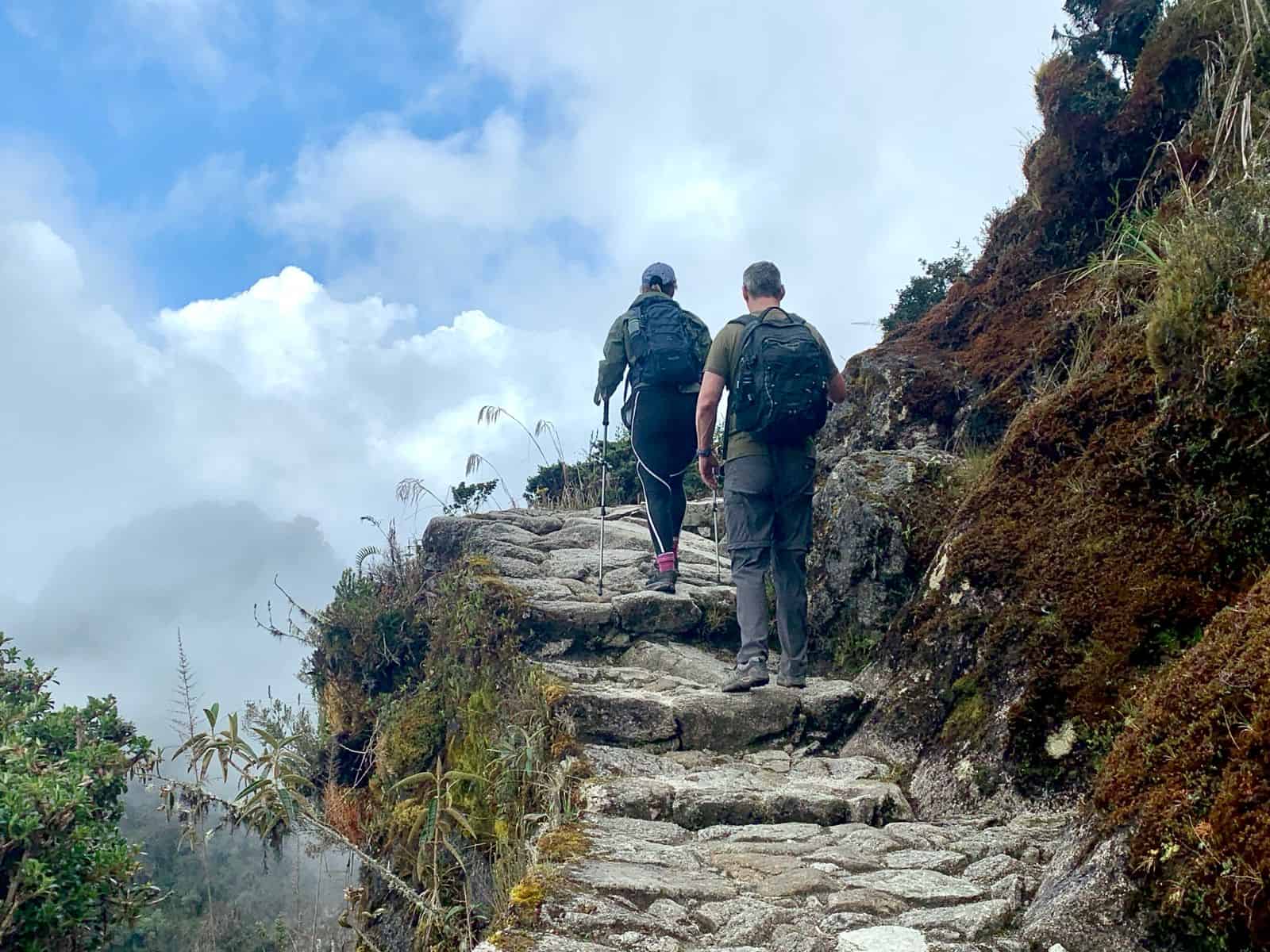
The Short Inca Trail is considered easy to moderate for people in reasonably good physical condition. The main challenge isn’t the distance itself but the accumulated elevation gain (over 500 meters), the uneven Inca stone steps, and the humidity of the cloud forest, which can become slippery during the rainy season. No prior trekking experience is required, but proper footwear, a realistic pace, and ideally a couple of days of acclimatization in Cusco beforehand are recommended.
Permits and regulations: what you need to know
Access to the entire Inca Trail network including the short version is strictly regulated by the Peruvian government through the National Service of Protected Natural Areas (SERNANP) and the Ministry of Culture. Key points include:
- Limited daily quota: 250 permits are issued per day across the whole network, of which approximately 200 are for tourists and the rest for guides, cooks, and porters.
- Only through authorized operators: it’s not possible to buy a permit independently; it must be arranged through a government-certified agency.
- Tied to your passport: each permit is linked to the traveler’s passport number, so any change in personal details must be reported to the agency before the trip.
- Recommended booking window: for the Short Inca Trail, 2 to 3 months in advance is usually enough, though during high season (May–October) it’s best to book with more lead time, as availability can sell out quickly.
- Annual closure: the entire Inca Trail network, including the short route, remains closed during the month of February for maintenance work.
What’s included in the 2-day Short Inca Trail
While details vary by operator, most Short Inca Trail packages include:
- Ground transfer from Cusco to the Ollantaytambo train station (round trip).
- Tourist train ticket (usually Expedition) from Ollantaytambo to Km 104, and from Aguas Calientes back.
- Official Short Inca Trail entrance permit (Route 05), arranged by the agency.
- Professional bilingual guide (Spanish and English) throughout the hike and the Machu Picchu tour.
- Porter for camping equipment and, in some cases, for allowed personal luggage.
- Machu Picchu entrance ticket (according to the assigned circuit).
- Meals along the route: boxed lunch and dinner on day one, breakfast on day two.
- One night of hotel accommodation in Aguas Calientes.
- Bus transportation up and down between Aguas Calientes and the Machu Picchu citadel.
- First aid kit and, with several operators, emergency oxygen and a satellite phone.
What’s NOT included in the 2-day Short Inca Trail
To avoid surprises, keep in mind that the following are typically not included:
- Entrance tickets to Huayna Picchu or Machu Picchu Mountain (purchased separately and subject to limited availability).
- Trekking poles (usually available to rent for an extra fee, generally between $5 and $10).
- Tips for the guide, porters, and support staff.
- Alcoholic beverages or snacks outside the set meal itinerary.
- Travel insurance or medical expenses (recommended to purchase separately before the trip).
- Dinner on day two or any meals after returning to Cusco.
- Date changes once the booking is confirmed: the permit is personal, nominal, and non-transferable.
Price of the 2-day Short Inca Trail
Prices vary depending on the operator, service level (hotel vs. camping), and season, but as a general reference:
- The approximate cost ranges between $490 and $750 USD per person, depending on whether the package includes a hotel or camping in Aguas Calientes.
- The price typically includes: the official Short Inca Trail permit, train ticket, ground transportation, Machu Picchu entrance, professional guide, and meals per the itinerary.
- Optional add-ons like access to Huayna Picchu Mountain or Machu Picchu Mountain cost an additional $65 USD approximately per person and require a special permit that must be requested at the time of booking.
Practical tips for your hike
- Book in advance, especially if traveling between May and October.
- Wear trekking shoes that are already broken in to avoid blisters.
- Stay hydrated constantly and consider bringing altitude sickness pills if you’re sensitive to elevation.
- Sunscreen, a hat, and a rain layer are essential, as weather can change quickly in the high jungle.
- Carry cash in soles for tips, drinks, or optional services like the hot springs in Aguas Calientes.
- Double-check what’s included in your package (meals, mountain entrances, lodging) before booking.
Short Inca Trail or Classic 4-day Inca Trail?
If time is your priority, the Short Inca Trail lets you experience the essence of the route — including walking in through the Sun Gate in a fraction of the time. The Classic Inca Trail, on the other hand, offers a more complete 43-km (26-mile) journey through multiple archaeological sites and the imposing Warmiwañusca Pass at 4,215 meters, but it requires greater physical preparation and booking much further in advance.
Why choose the 2-day Inca Trail: its main advantages
- You save time without sacrificing the essential experience. In just 2 days you get the same symbolic ending as the Classic 4-day Inca Trail: walking into Machu Picchu through the Sun Gate.
- Lower physical and altitude demands. Staying below 2,730 meters, it’s a much more accessible option for those unaccustomed to high-mountain trekking or worried about altitude sickness.
- Ideal if you missed out on the Classic Trail permits. With its own independent daily quota, it’s an excellent alternative once the 500 daily permits for the 4-day Inca Trail have sold out.
- Hotel accommodation, not camping. Unlike the longer version, you spend the night in a hotel in Aguas Calientes, with a bed, hot shower, and greater comfort.
- Includes genuine archaeological sites. You walk through Chachabamba and Wiñay Wayna, two of the best-preserved Inca complexes in the entire trail network.
- Perfect for families and time-limited travelers. Requiring only one full day of hiking, it fits neatly into shorter Peru itineraries without giving up the authenticity of arriving on foot.
- Lower cost than the Classic Trail. With fewer operating days, less logistics, and less staff required, its price is generally more accessible than the 4-day trek.
- Less crowded than arriving directly by train. While not a solitary route, it offers a more intimate, historically connected experience than simply taking the train straight to Aguas Calientes.
The 2-day Short Inca Trail to Machu Picchu is the perfect option for those who want to connect with Inca history, walk along original trails, and reach the lost citadel through the historic Sun Gate all within a compact, accessible itinerary. Booking with an authorized agency, planning ahead, and preparing physically are the keys to fully enjoying this unique experience in the Peruvian Andes.