
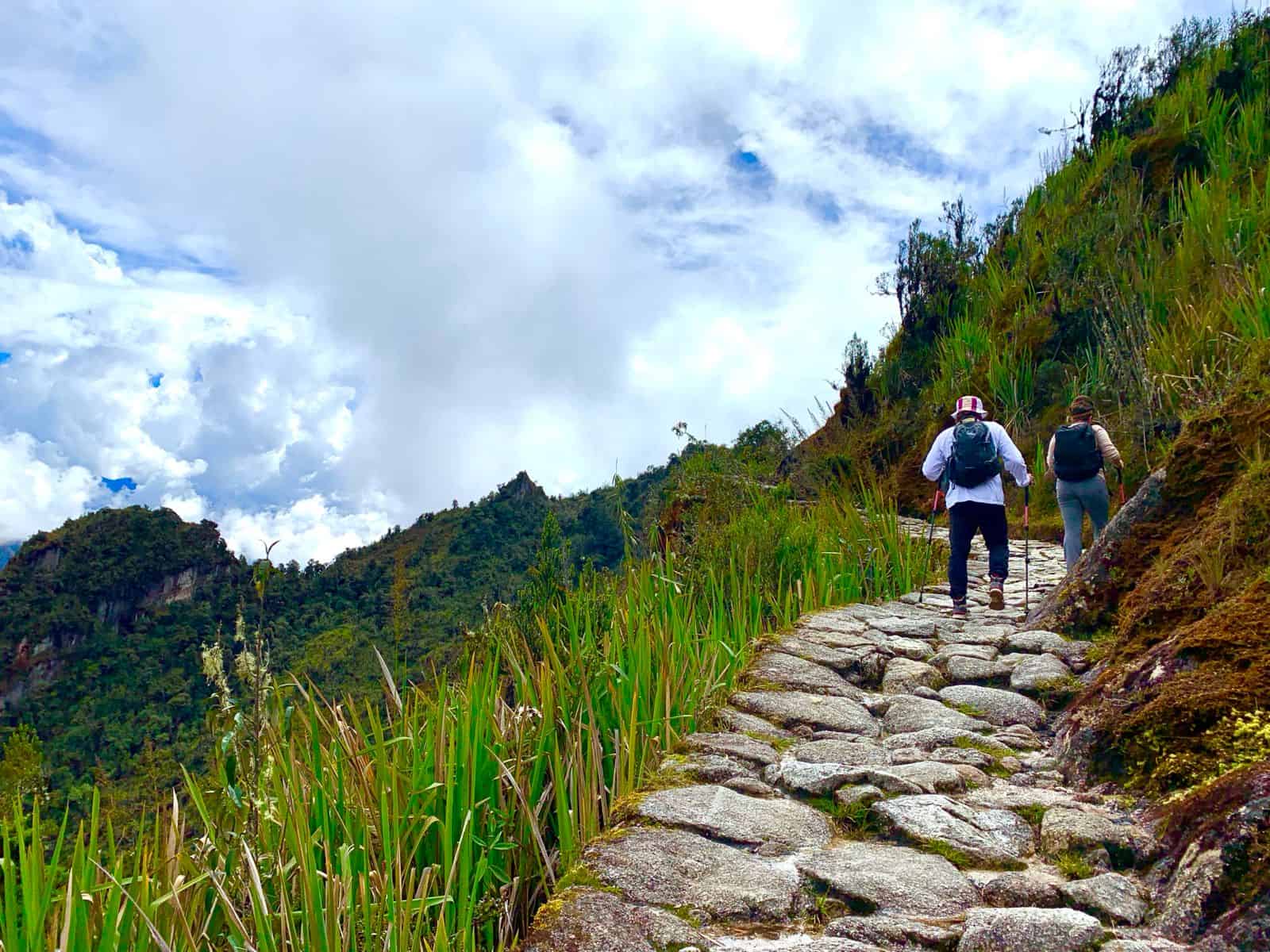
How Difficult Is the 2-Day Inca Trail to Machu Picchu?
The 2-day Inca Trail is moderately difficult. Hikers cover approximately 6.3 miles (10 kilometers) in a single day, navigating steep stone steps and reaching elevations up to 8,956 feet (2,730 meters). It requires a reasonable level of fitness, but is highly accessible to beginners who prepare properly and acclimatize to the altitude beforehand.
Hiking to Machu Picchu is a true adventure, making the journey to the Inca Citadel as rewarding as the ruins themselves. For travelers short on time or hesitant to commit to four days of intense trekking, the 2-day Inca Trail offers the perfect solution. You get the thrill of hiking through the cloud forest, the historical awe of walking the original pathways of the Inca Empire, and the unforgettable moment of seeing Machu Picchu from the Sun Gate.
However, many travelers wonder exactly what to expect from this express route. The phrase «short trail» can be slightly misleading, leading some hikers to underestimate the physical demands of the Andean terrain. Knowing what to expect regarding altitude, trail conditions, and hiking duration is essential for a safe and enjoyable trip.
This comprehensive guide breaks down every detail of The 2-day Inca Trail to Machu Picchu. You will learn exactly why the trail can be challenging, discover the fascinating archaeological sites along the route, and review a complete step-by-step itinerary. We also provide actionable tips to help you prepare physically and explain exactly when you need to secure your permits.
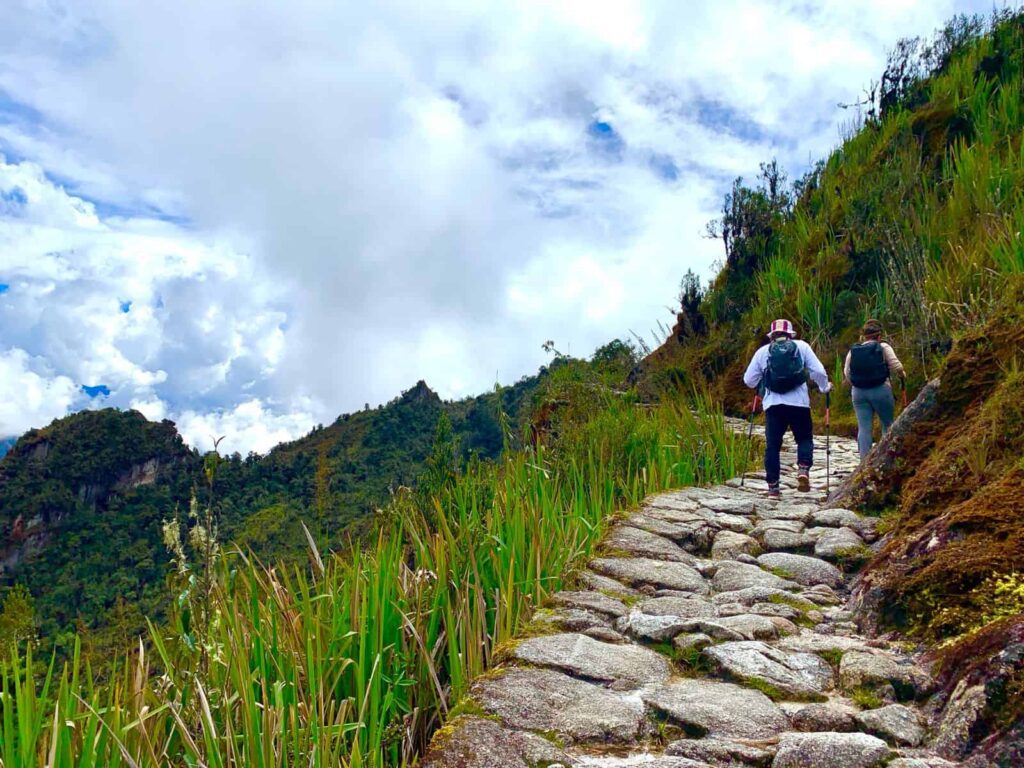
Why Might the 2-Day Inca Trail Be Difficult?
While the 2-day Inca Trail is the most accessible trek to the citadel, it is not a simple walk in the park. The difficulty stems primarily from three specific factors: the altitude, the steep terrain, and the duration of the hike.
Managing the High Altitude
The most significant challenge for most hikers on the 2-day Inca Trail is the altitude. The trek officially begins at Kilometer 104 (Chachabamba), which sits at an elevation of 6,900 feet (2,100 meters) above sea level. From there, you will climb steadily to the highest point of the hike at the Sun Gate, or Inti Punku, which rests at 8,956 feet (2,730 meters).
At these elevations, the air contains less oxygen than at sea level. Your body has to work harder to supply oxygen to your muscles, which makes physical exertion feel much more taxing. Symptoms of mild altitude sickness include shortness of breath, fatigue, headaches, and nausea. Proper acclimatization in the city of Cusco (11,152 feet / 3,399 meters) or the Sacred Valley (9,420 feet / 2,870 meters) is absolutely critical to minimize these effects.
Navigating Steep Inca Steps
The Incas were master builders, and their stone pathways have survived centuries of weathering. However, these original stone steps are notoriously steep and uneven. The most demanding section of the 2-day Inca Trail occurs right before you reach the archaeological site of Wiñay Wayna. Hikers refer to this section as the «Gringo Killer»—a steep, relentless flight of stone stairs that demands serious leg strength and cardiovascular endurance.
Descending can also be tough on the knees. While the 2-day route involves more climbing than descending compared to the classic 4-day route, the uneven terrain requires constant focus and sturdy footwear with excellent ankle support.
Enduring the Hiking Time and Distance
The active hiking portion of the 2-day Inca Trail takes place entirely on the first day. You will cover approximately 6.3 miles (12 kilometers) of trail. Depending on your walking pace, weather conditions, and how often you stop to take photographs, the hike typically takes between six and seven hours to complete. Spending six continuous hours on your feet, mostly moving uphill under the Andean sun, requires a solid baseline of physical stamina.
The Complete 2-Day Inca Trail Itinerary
To fully grasp the difficulty and the rewards of the 2-day Inca Trail, you need to understand the schedule. Here is the complete, detailed itinerary for the journey.
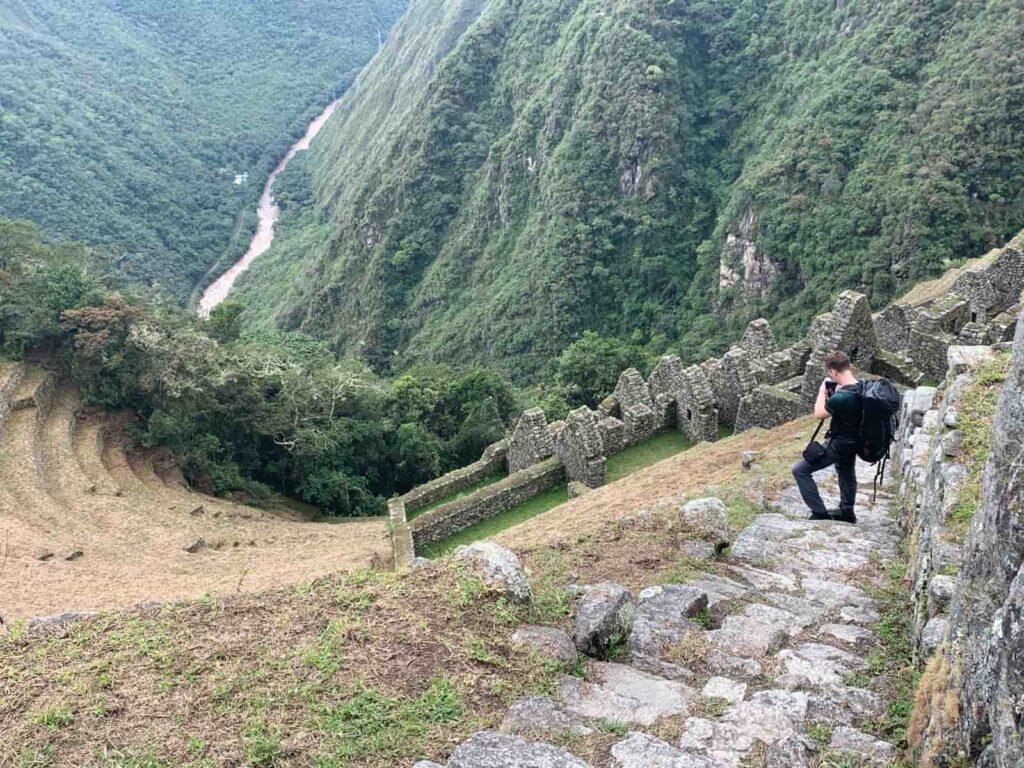
Day 1: Train to KM 104, Hiking the Trail, and Reaching the Sun Gate
Your adventure begins early in the morning. We specialize in guiding small groups through Machu Picchu and the Andean lands of Peru, ensuring you have reliable transportation from your hotel in Cusco or Ollantaytambo to the train station.
You will board the train and travel along the winding Urubamba River until you reach Kilometer 104, the official checkpoint for the Short Inca Trail. After presenting your passport and permits, you cross a suspension bridge over the river and begin the trek.
The first section is a gradual uphill climb that takes about three hours. You will hike through beautiful cloud forests, enjoying diverse flora and fauna, including wild orchids and native bird species. Around midday, you will conquer the steepest section of stairs to arrive at Wiñay Wayna. Here, you will stop to eat a packed lunch, rest your legs, and explore the magnificent ruins.
After lunch, the trail continues for another two hours. This section is relatively flat but narrow, hugging the side of the mountain. Your final hurdle is a nearly vertical flight of 50 steps leading straight up to Inti Punku (the Sun Gate). Reaching the top is a spectacular moment. You will get your first, sweeping view of Machu Picchu sprawling below you.
After taking photos, you will hike down a gentle slope for 45 minutes to reach the main citadel. Because it is late in the afternoon, the crowds will have thinned out, offering a peaceful first impression. You will not tour the site today; instead, you will board a shuttle bus down the mountain to the town of Aguas Calientes. You will spend the night in a comfortable hotel, enjoy a hot shower, and eat dinner at a local restaurant.
Day 2: Exploring the Machu Picchu Citadel
On the second day, there is no intense hiking required. You will wake up early, eat breakfast at your hotel, and catch one of the first shuttle buses back up the mountain to Machu Picchu.
You will enter the site with your expert guide, who will lead you on a comprehensive two-to-three-hour walking tour. You will explore the intricate stonework of the Temple of the Sun, the Main Plaza, and the Intihuatana stone. Your guide will explain the history, architecture, and enduring mysteries of the Inca Empire.
After the guided tour, you will take the bus back down to Aguas Calientes. You will have time to grab lunch or explore the town’s artisan markets before boarding your afternoon train back to Ollantaytambo, followed by a private transfer back to your hotel in Cusco.
Inca Sites You Will See Along the Way
One of the greatest benefits of the 2-day Inca Trail over taking the train directly to Machu Picchu is the opportunity to see exclusive archaeological sites that are only accessible by foot.
Chachabamba
Located immediately after the Kilometer 104 checkpoint, Chachabamba is the first Inca site you will encounter. Discovered in 1940, this site sits at 7,050 feet (2,150 meters). Historians believe Chachabamba served as a vital religious and administrative checkpoint for travelers heading to Machu Picchu. The site features a central plaza and several well-preserved stone buildings.
Wiñay Wayna
Wiñay Wayna translates to «Forever Young» in the native Quechua language. It is widely considered the most beautiful archaeological site on the entire Inca Trail system. The complex is built into a steep hillside and features a stunning series of agricultural terraces cascading down the mountain. Wiñay Wayna includes an upper and lower architectural complex connected by a long staircase alongside fountain structures used for ritual bathing.
Inti Punku (The Sun Gate)
Inti Punku was the original, main entrance to Machu Picchu. The Incas strategically built this gate in a pass between two mountain peaks to control access to the citadel. Today, it remains the ultimate reward for hikers. Passing through the stone doorways of Inti Punku and seeing the ancient city framed by the surrounding mountains is a moment you will never forget.
Tips for Preparing for the 2-Day Inca Trail
Preparation makes the difference between an exhausting ordeal and an incredible adventure. Follow these tips to ensure you are ready for the hike.
- Acclimatize properly: A great way to prepare for the 2-Day Inca Trail to Machu Picchu is to visit the Sacred Valley of the Incas and spend the night in Ollantaytambo before your trek. Located at a lower altitude than Cusco, the Sacred Valley offers better conditions for acclimatization and can help reduce the risk of altitude sickness. Staying overnight in Ollantaytambo also places you closer to the trailhead, making for a more relaxed start to your adventure. Drink plenty of water, avoid heavy meals, and consider trying coca tea, a traditional local remedy for altitude adjustment. .
- Build your cardiovascular fitness: Two to three months before your trip, start a workout routine. Focus on activities like running, cycling, or swimming. Incorporate stair climbing into your routine to prepare your legs for the Inca steps.
- Break in your hiking boots: Never hike the 2-day Inca Trail in brand-new shoes. Wear your hiking boots on multiple practice hikes to ensure they are comfortable and will not cause blisters.
- Pack a smart daypack: You only carry a small daypack on the trail (the rest of your luggage is sent ahead by train). Pack essential items like sunscreen, insect repellent, a rain poncho, a reusable water bottle holding at least two liters, and extra layers for changing temperatures.
- Use trekking poles: If you have sensitive knees, trekking poles are highly recommended for the steep descents. Note that the Peruvian government requires poles to have rubber tips to protect the ancient stones.
When Should You Book the 2-Day Inca Trail?
The Peruvian government strictly regulates the number of people allowed on the Inca Trail network to protect the environment and the ruins. The 2-day Inca Trail has a maximum capacity of 250 hikers per day.
Because of this daily limit, you must book your permits well in advance. For travel during the dry season (May through September), you should reserve your spot at least three to four months in advance. If you are traveling during the shoulder season (April or October), two months in advance is generally sufficient. Remember that the entire Inca Trail system is closed every February for heavy rain and maintenance.
Unique experiences in Peru designed for you by local experts await. Securing your permits early guarantees you will not miss out on this bucket-list hike.
Plan Your Dream Trip
Hiking the 2-day Inca Trail offers the perfect balance of physical challenge and breathtaking historical exploration. While the steep stairs and high altitudes demand respect and preparation, the journey is entirely achievable for most travelers who put in the effort beforehand.
Let’s plan your dream trip to Machu Picchu. Reach out to our team of local experts today to secure your permits, customize your itinerary, and prepare for an unforgettable trek through the heart of the Inca Empire.
Frequently Asked Questions
What is the best time of year to hike the 2-day Inca Trail?
The optimal time to hike the 2-day Inca Trail is during the dry season, which runs from May to September. During these months, you will experience clear skies and minimal rainfall, making the steep stone steps safer to navigate. Choose this window if avoiding rain is your top priority.
Do I need to hire a guide for the 2-day Inca Trail?
Yes. The Peruvian government mandates that all hikers on the Inca Trail network, including the 2-day route, must be accompanied by a licensed tour guide. You cannot hike the trail independently.
Is there an age limit for the 2-day Inca Trail?
There is no official upper age limit, provided the hiker is in good physical condition. However, it is not recommended for children under 8 years old due to the steep terrain and the physical stamina required to hike six hours in a single day.
Are there restrooms along the 2-day Inca Trail?
Yes, there are basic restroom facilities located at the Kilometer 104 checkpoint at the start of the hike, and again near the Wiñay Wayna archaeological site around lunchtime. Hikers must bring their own toilet paper and hand sanitizer.
What happens if I cannot finish the hike?
Because the 2-day Inca Trail is a linear route through the mountains with no road access, you must complete the hike once you start. In severe medical emergencies, guides are trained in first aid, carry oxygen, and can coordinate emergency evacuations with local authorities.
👉 Planning to hike the 2-Day Inca Trail to Machu Picchu?
We are a local company specializing in the Short Inca Trail. Our experienced local guides have spent years on this route and are passionate about sharing the history, culture, and hidden stories of the Andes. Join us for an authentic and unforgettable journey to Machu Picchu
Book now before Inca Trail permits sell out for September and the upcoming months


